Skip to content


What is FinOps?
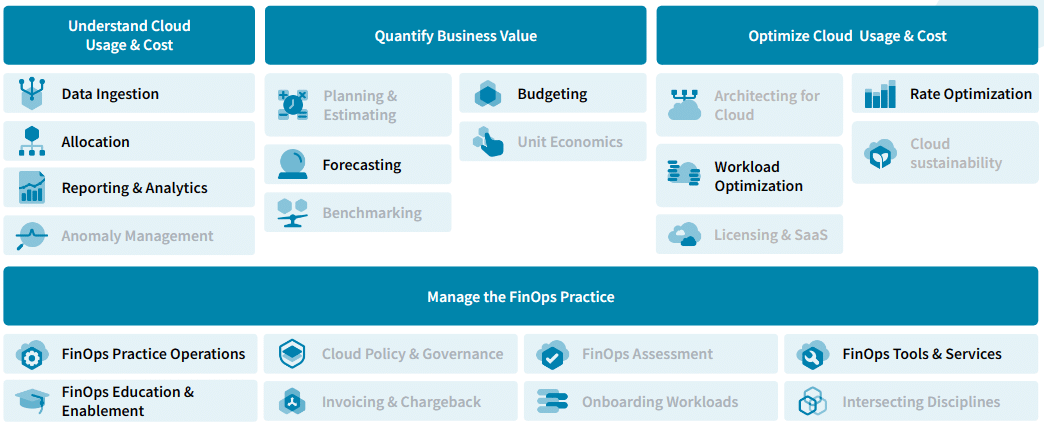
FinOps (cloud financial operations) is a way for companies to manage cloud spend using shared ownership between engineering, finance, and product teams. FinOps sets up simple habits—like cost visibility, tagging/allocation, forecasting, and ongoing optimization—so teams can make day-to-day tradeoffs between cost, performance, and delivery speed. The goal is to maximize the value of your cloud resources, with cloud spending tied to real business outcomes.
Benefits of FinOps
According to the FinOps foundation, the benefits of FinOps include:
- Maximize business value from cloud spend by connecting usage and cost data to the decisions that drive outcomes (not just “cutting costs”).
- Enable timely, data-driven decision-making so teams can make tradeoffs with current cost/usage information instead of lagging reports.
- Create shared financial accountability across teams (engineering, finance, and business) so cost responsibility lives with the people who influence it.
- Improve cost visibility and accurate allocation (e.g., via tags/accounts/business rules) so reporting is trustworthy and actionable.
- Strengthen budgeting, forecasting, and KPI-driven governance using allocation and reporting to build forecasting trends, benchmarking KPIs, and metrics that reveal value.
- Break down silos and support cost-aware product decisions by making granular cost/usage information available beyond leadership—so product and engineering can optimize earlier in the lifecycle.
What is FinOps Consulting?
FinOps consulting refers to advisory and implementation services that help organizations establish, mature, or accelerate a FinOps practice. Based on guidance from the FinOps Foundation, this typically includes assessing current cloud cost management maturity, defining operating models and governance, improving cost visibility and allocation, and helping teams get more value out of their cloud investments. The key benefit of FinOps consulting is speed —it gives teams immediate access to deep industry knowledge and experienced practitioners so they can control cloud expenses and optimize cloud environments faster than building a FinOps practice from scratch.
FinOps Strategies, Compared: In-House vs Consulting vs Platform
Let’s briefly break down the pros and cons of each approach to optimize cloud costs.
FinOps In-House
An in-house FinOps approach means building internal ownership for efficient cloud operations, typically through a dedicated FinOps role or team. This team is responsible for cost visibility, allocation, governance, optimization practices, and cross-functional coordination over time. While this approach offers the highest level of organizational control and long-term continuity, it requires significant internal investment in people, process, and executive alignment. As a result, time to value is slower, but the impact can be durable once the practice is established.
FinOps Consulting
FinOps consulting involves working with external experts to optimize cloud spending, design operating models, and implement FinOps practices more quickly than most teams can do on their own. Consultants often bring structured frameworks, benchmarks, and prior experience that help organizations accelerate early progress or tackle complex environments. This approach can deliver fast results, but the impact is typically time-bound and depends on the duration and scope of the engagement unless internal teams are fully enabled to take over.
FinOps Platform
A FinOps platform provides software-based tooling for cloud cost visibility, allocation, reporting, and cost reduction. These platforms are designed to integrate directly with cloud providers and surface actionable insights quickly, often with much lower upfront cost than hiring or consulting. The goal is to reduce manual effort and support ongoing FinOps workflows. For many organizations, platforms serve as a scalable foundation that complements either in-house ownership or external consulting.
Let’s sum up with a quick table comparing each cloud cost optimization strategy:
| Strategy | Cost | Time to value | Internal effort required | Ongoing impact | Organizational control & customization | Best for maturity level |
|---|---|---|---|---|---|---|
| FinOps In-House | 🔴 | 🔴 | 🔴 | 🟢 | 🟢 | Organizations willing to build and own FinOps long term |
| FinOps Consulting | 🔴 | 🟢 | 🟡 | 🔴 | 🟡 | Large / enterprise teams with complex cloud environments |
| FinOps Platform | 🟢 | 🟢 | 🟢–🟡 | 🟢–🟡 | 🟡 | Small and mid-sized teams needing scalable, ongoing FinOps |
Top FinOps Certified Service Providers
Below are six major FinOps consulting firms/cloud FinOps service providers relied on by large enterprises to improve cost control and optimize their cloud journey.
1) Accenture
Accenture is a global professional services company known for large-scale technology and transformation work across industries, with operations in 120+ countries and a very large global workforce. It originally operated as Andersen Consulting (spun out from Arthur Andersen) and later rebranded to Accenture, a history that still shapes how it’s positioned in “business + tech” programs today. In a FinOps context, Accenture tends to show up when FinOps is part of a broader cloud modernization or “cloud economics” initiative—especially where teams want an end-to-end partner that can cover operating model design, tooling integration, and execution across multiple clouds.
2) Deloitte
Deloitte is one of the Big Four professional services networks and is widely cited as the largest by revenue and headcount, with deep benches across audit, tax, consulting, and advisory—useful when FinOps needs to connect to governance and financial operating rhythms. The firm traces its origin to William Welch Deloitte founding a London accounting practice in 1845, and it still emphasizes that “impact that matters” heritage in its corporate history. A notable differentiator on the cloud strategy side is Monitor Deloitte, which originated from Monitor Group (co-founded by Michael Porter) and was acquired by Deloitte in 2013—this matters if you want FinOps framed as strategy and operating model change, not only optimization of your cloud expenditure.
3) PwC
PwC (PricewaterhouseCoopers) is another Big Four network and often appeals to teams that want FinOps tightly connected to finance stakeholders, governance, and business performance reporting. PwC was formed in 1998 through the merger of Price Waterhouse and Coopers & Lybrand, and the firm’s own history notes roots going back to the mid-1800s. In practice, PwC’s unique angle for FinOps is the CFO-adjacent positioning: it’s frequently brought in when cloud cost management needs to map to budgeting/forecasting discipline, chargeback/showback approaches, risk/compliance considerations, or unit-economics narratives that leadership will actually use.
4) EY (Ernst & Young)
EY is a London-based global professional services network (Big Four) that provides assurance, tax, and consulting/advisory services, with a large international footprint. It was formed in 1989 through the merger of Ernst & Whinney and Arthur Young & Co., and later rebranded from “Ernst & Young” to “EY” (formalized in 2013). For FinOps programs, EY often resonates when the priority is governance and organizational alignment—especially where teams want clear decision rights, KPI structures, and repeatable processes that connect engineering and finance to achieve better cloud efficiency.
5) KPMG
KPMG is also Big Four and structured as a global network of member firms, with major practices spanning audit, tax, and advisory/consulting. The name KPMG is an initialism for Klynveld Peat Marwick Goerdeler, created when KMG merged with Peat Marwick in 1987—a useful “who they are” detail if you like including quick provenance. In FinOps work, KPMG tends to be a fit when leadership wants cloud financial management treated as part of broader enterprise control frameworks (risk, compliance, financial governance), not just a tactical cost efficiency motion.
6) Thoughtworks
Thoughtworks is a global technology consultancy founded in 1993 (Chicago) and is strongly associated with modern engineering practices and delivery culture. A distinctive “interesting” point: Martin Fowler is Thoughtworks’ Chief Scientist—widely known for influential writing on software architecture and agile/engineering practices—which signals the firm’s engineering-led DNA. In FinOps contexts, Thoughtworks often shows up where teams want FinOps embedded into engineering workflows (platform teams, product teams, delivery practices) rather than run as a finance-side reporting function—useful for orgs that want cost accountability to live closer to technical decision-making.
Limitations of FinOps Consulting
While FinOps consulting can accelerate cloud cost optimization and maturity, it also comes with tradeoffs organizations should consider before relying on external services long term:
- Higher ongoing cost compared to tools or in-house teams, especially when consulting is delivered through retainers or managed services rather than short, scoped engagements.
- Time-bound impact, since improvements and optimization often slow or stop once the engagement ends unless internal teams are fully enabled to take over.
- Risk of limited internal ownership, where cloud cost visibility, analysis, and decision-making remain dependent on the provider instead of becoming embedded across engineering and finance teams.
- Integration and change management overhead, as aligning an external team’s workflows, reporting, and recommendations with existing tools, processes, and org structures can take time.
- Standardized playbooks that may not fully fit your organization, requiring additional effort to adapt governance models, allocation logic, and KPIs to how your teams actually operate.
- Data access and security considerations, since effective FinOps consulting requires deep visibility into cloud usage, cloud cost data, and sometimes sensitive business context.
Alternatives to FinOps Consulting: Autonomous Cloud Cost Optimization
If the downsides of FinOps consulting give you pause—ongoing cost, slower visibility, limited automation, or the risk of becoming dependent on a third party—nOps gives you a different path. Instead of outsourcing FinOps, nOps helps your team run FinOps with real-time data, automation, and workflows that plug directly into engineering.
Here’s how nOps helps replace (or reduce) the need for FinOps services:
- Automated, certified FinOps platform instead of manual services. nOps is an AI-powered cost optimization platform that helps customers cut cloud spend by 50%+ on average using automation rather than costly services work. This is the work many FinOps services still do by hand; with nOps, it’s handled autonomously.
- Better pricing model. nOps helps you save on resource optimization, autoscaling and discount management with simple, flat fee or percentage-of-savings models — so you can optimize costs at a fraction of the price without hiring expensive consultants or contractors.
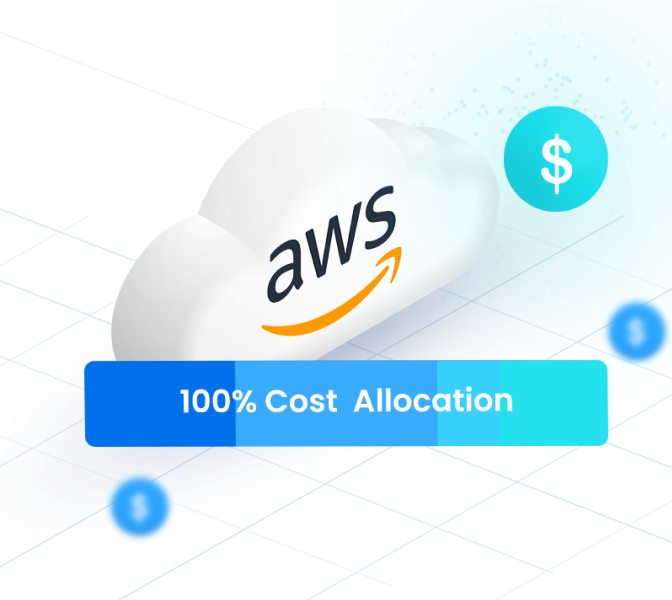
- 100% cost allocation — even with messy tags and shared resources. In addition to delivering significant cost savings, nOps is built to deliver complete visibility and 100% cost allocation across cloud service providers, Kubernetes, SaaS and AI spend.
Want to try it out nOps for free within your own environment? Book a demo call with one of our Finops experts to find out how much you can save today.
nOps manages $3 billion in cloud spend for our customers and is rated 5 stars on G2.