Skip to content

- Blog
- EKS Optimization
- Cast AI Alternatives: 11 Best Kubernetes Cost Optimization Tools
Cast AI Alternatives: 11 Best Kubernetes Cost Optimization Tools
Cast AI is a well-known Kubernetes cost optimization platform — but it’s not the only option. As cloud environments grow more complex across commitments, multi-cloud infrastructure, AI workloads, and SaaS spend, many teams begin evaluating alternatives that go beyond Kubernetes autoscaling alone.
In this guide, we’ll cover top competitors to Cast AI, pros and cons, and what to look for in a platform to help you choose the right alternative.
What is Cast AI?
Cast AI is a Kubernetes cost optimization platform that automates cluster scaling, node provisioning, and spot orchestration to reduce compute waste. It addresses the core problem of Kubernetes cost optimization — overprovisioned clusters and inefficient resource allocation — by continuously adjusting infrastructure to match real-time workload demand. Teams use Cast AI to lower Kubernetes compute costs without manually managing autoscaling rules, instance selection, or cluster tuning.
Why Teams Look for Cast AI Alternatives
Cast AI focuses primarily on Kubernetes autoscaling and operates as a proprietary platform, which can introduce vendor lock-in and limit flexibility for teams seeking broader, multi-layer cloud cost optimization.
Let’s take a look at a few of the tradeoffs:
Limitations of Cast AI
Because Cast AI focuses narrowly on Kubernetes autoscaling, significant savings in commitments, SaaS, AI workloads, and non-Kubernetes compute often go untouched. To fully optimize cloud spend, teams typically need to layer on additional tools and subscriptions — increasing complexity, cost, and operational overhead.
Pricing considerations
Cast AI can become expensive quickly as Kubernetes usage scales, since fees grow alongside cluster compute. Unlike outcome-aligned models that charge a portion of realized savings, usage-based pricing means costs rise with infrastructure — regardless of whether total cloud savings increase proportionally.
Multi-cloud vs Kubernetes-only optimization
Most organizations operate beyond Kubernetes alone — with spend across AWS, Azure, GCP, AI infrastructure, and SaaS platforms. Limiting optimization to clusters creates blind spots.
Automation vs visibility tools
Some teams want deeper financial automation (e.g., commitment lifecycle management), while others only require Kubernetes cost visibility — making scope and automation depth key decision factors.
Key Features to Look for in a Cast AI Alternative
The most important platform capabilities include:
Kubernetes cost optimization
Look for automated cluster optimization beyond simple dashboards — including rightsizing, binpacking, autoscaling, and workload-level efficiency improvements. The strongest platforms combine real-time scaling (HPA/VPA), intelligent node provisioning (e.g., Karpenter), and cost-aware scheduling to reduce waste without sacrificing reliability or performance.
Commitment automation
Commitments (Savings Plans, Reserved Instances, CUDs) often represent the largest cloud savings lever. A strong alternative should offer autonomous lifecycle management — continuously rebalancing, forecasting, and adjusting coverage to maximize effective savings rates without manual modeling or spreadsheet management.
Multi-cloud cost management
If you operate across AWS, Azure, and GCP, visibility and optimization should extend across providers. Look for unified reporting, normalized billing data, and cross-cloud optimization capabilities — especially if workloads, commitments, and AI infrastructure span multiple environments.
Spot instance optimization
Spot instances can significantly reduce compute costs, but they require intelligent orchestration to avoid reliability risks. The right platform should automate spot placement, fallback strategies, and workload resilience to safely capture savings without increasing operational overhead.
Cost visibility and forecasting
Optimization requires clear financial insight. The best platforms provide real-time cost allocation, anomaly detection, and forward-looking forecasting — helping engineering and finance teams understand spend drivers, measure realized savings, and plan infrastructure investments.
Top Cast AI Alternatives in 2026
We analyzed platforms across the industry and rounded up the top Cast.ai alternatives for Kubernetes:
#1. nOps (Best Cast AI Alternative for Automated Cloud Cost Optimization)
nOps is an automation-first cloud cost optimization platform focused primarily on autonomous commitment management, with additional optimization across Kubernetes, compute, SaaS, and AI workloads. While Cast AI concentrates on Kubernetes autoscaling and cluster efficiency, nOps targets a larger financial lever: continuously optimizing cloud commitments (Savings Plans, Reserved Instances, CUDs) to drive higher effective savings rates across AWS, Azure, and GCP.
Features
Automated hourly commitment management for maximum flexibility and the highest effective savings rate in the industry (35-50%+)
Multi-cloud visibility and optimization across AWS, Azure, GCP, Kubernetes, SaaS and AI
Kubernetes cost visibility and optimization for EKS and container workloads.
Real-time savings tracking, cost allocation and FinOps-aligned reporting.
Savings-first pricing model means there’s no risk/downside to adopt
Pro(s):
Focuses on the highest-impact savings lever (commitments) while also covering Kubernetes and compute optimization, delivering broader financial impact than Kubernetes-only platforms.
Con(s):
Delivers the strongest ROI for organizations with meaningful cloud spend (typically $10K+/month).
Why choose nOps over Cast AI? nOps offers a free savings analysis so you can find out in less than 30 minutes how much you can save. It’s fully automated and the fee is a fraction of effective savings, so there’s no downside to adoption.
Demo
AI-Powered Cost Management Platform
Discover how much you can save in just 10 minutes!
2. Kubecost
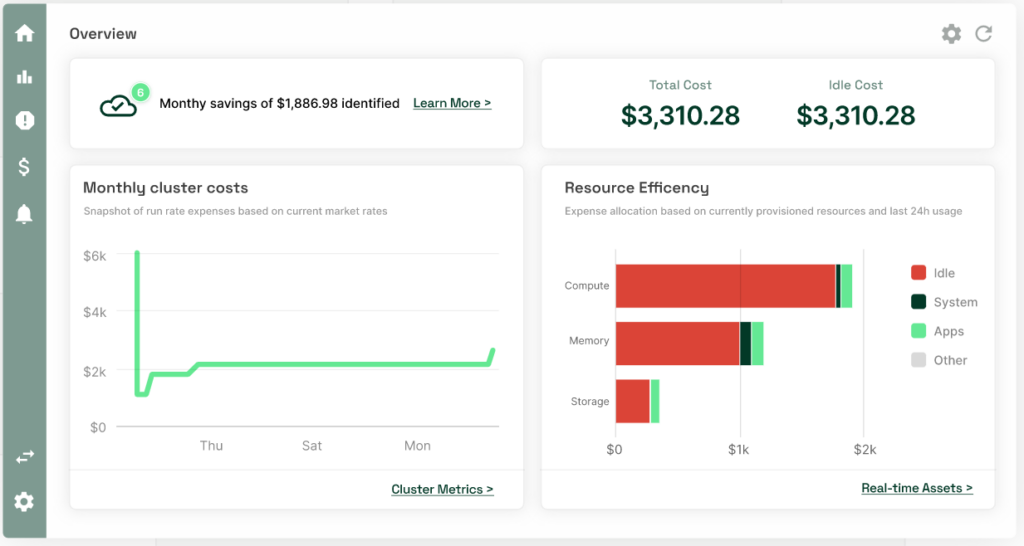
Kubecost is an open-source Kubernetes cost monitoring platform that provides granular cost visibility across namespaces and workloads.
Features
Real-time cost monitoring and dashboarding for Kubernetes clusters.
Allocation by namespaces, workloads, labels, and deployments.
Budget alerts, forecasting, and anomaly detection support.
Integration with cloud billing data for accurate Kubernetes spend estimation.
Chargeback/showback and multi-cluster reporting for FinOps accountability
Pro(s):
Best-in-class Kubernetes cost visibility and reporting, with flexible attribution and governance.
Con(s):
Doesn’t (natively) provide fully automated cost optimization or dynamic autoscaling like Cast AI does.
Why choose Kubecost over Cast AI? Choose Kubecost if you need primarily visibility rather than optimization, i.e. transparent, granular Kubernetes spend data and governance tools.
3. Spot (part of Flexera, formerly Spot by NetApp and Spot.io)
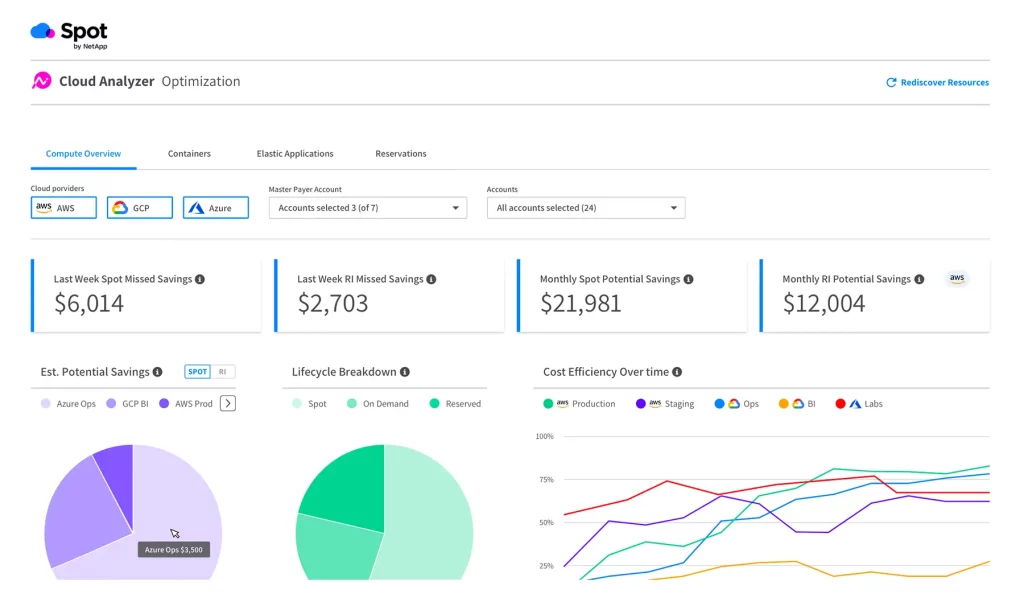
Spot is an enterprise platform focusing on Spot instance management and infrastructure optimization. It’s positioned as a broader compute-level optimization alternative to Cast AI’s Kubernetes autoscaling and resource optimization.
Features
Automated spot & commit-based cost optimization across AWS, Azure, and GCP compute resources.
Intelligent workload scaling and placement for VMs, containers, and Kubernetes workloads.
Predictive resource orchestration and auto-healing for high availability and SLA assurance.
Comprehensive visibility with cost analytics, showback/chargeback, and FinOps reporting.
Pro(s):
Strong compute-level optimization with spot instance automation and intelligent scaling, enabling significant cost reduction with minimal manual intervention.
Con(s):
More focused on spot/compute automation and FinOps workflows rather than Kubernetes-centric autoscaling and real-time workload optimization like Cast AI.
Why choose Spot by NetApp? Choose Spot if you need a cloud-agnostic compute optimization and automation platform that emphasizes cost savings via spot instance utilization.
4. CloudZero
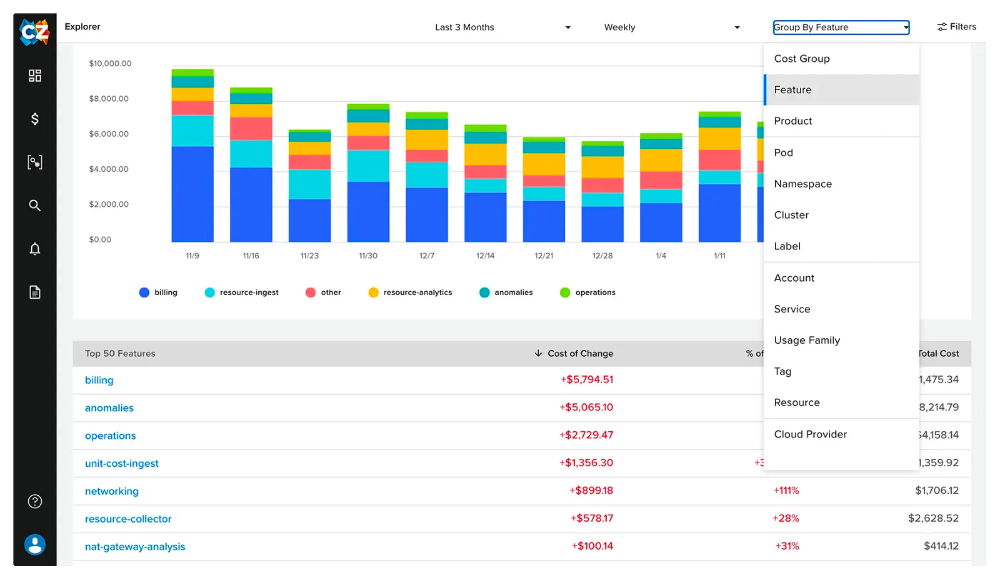
CloudZero is a unit cost intelligence platform built for SaaS and cloud-native companies that want to connect cloud spend directly to business metrics (like customer, feature, or product line) — positioned as a business-centric visibility and allocation alternative rather than a Kubernetes autoscaling optimizer like Cast AI.
Features
Unit cost modeling (cost per customer, per feature, per environment).
Spend allocation without heavy tagging requirements.
Cost management across AWS, Azure, and GCP in a user-friendly interface
Anomaly detection and cost change intelligence to support business goals.
FinOps reporting aligned to engineering and finance stakeholders.
Pro(s):
Excellent for SaaS companies that want to understand cloud costs in relation to revenue, customers, and product usage — strong business alignment.
Con(s):
Does not provide automated scaling or infrastructure rightsizing like Cast AI; primarily focused on cost intelligence.
Why choose CloudZero over Cast AI? Choose CloudZero if your main priority is understanding cloud cost per customer or product metric, rather than automating Kubernetes infrastructure optimization.
5. Harness Cloud Cost Management
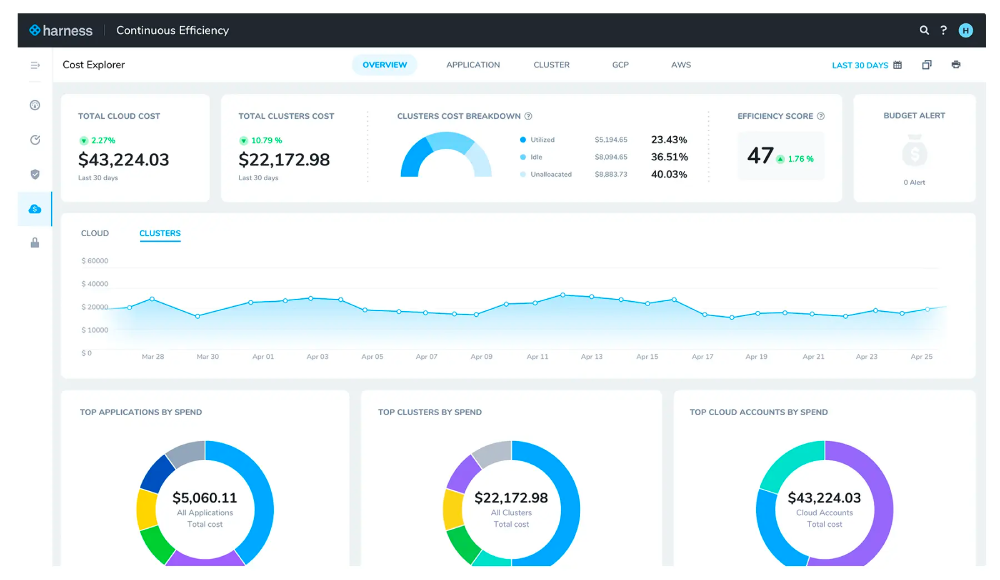
Harness CCM is a DevOps-oriented cost control platform within the broader Harness suite that brings FinOps visibility and cost controls closer to deployment workflows, including automated idle resource stopping to reduce waste across cloud and Kubernetes.
Features
- Multi-cloud cost transparency across AWS, Azure, and GCP.
- Kubernetes cost allocation by cluster, namespace, workload, and label.
- Budget alerts, forecasting, and anomaly detection support.
- Chargeback/showback reporting for FinOps accountability.
- Automated idle resource stopping for non-production waste reduction.
Pro(s):
Strong fit for teams that want cost management embedded in an existing Harness/DevOps platform, with practical automation to reduce idle spend.
Con(s):
Doesn’t deliver Cast AI-style continuous Kubernetes optimization (autoscaling, binpacking, node orchestration).
Why choose Harness Cloud Cost Management over Cast AI? Choose Harness CCM if you want DevOps-adjacent cost visibility and governance (plus automated idle stopping) inside the Harness platform, rather than Kubernetes-first autoscaling optimization.
6. Zesty
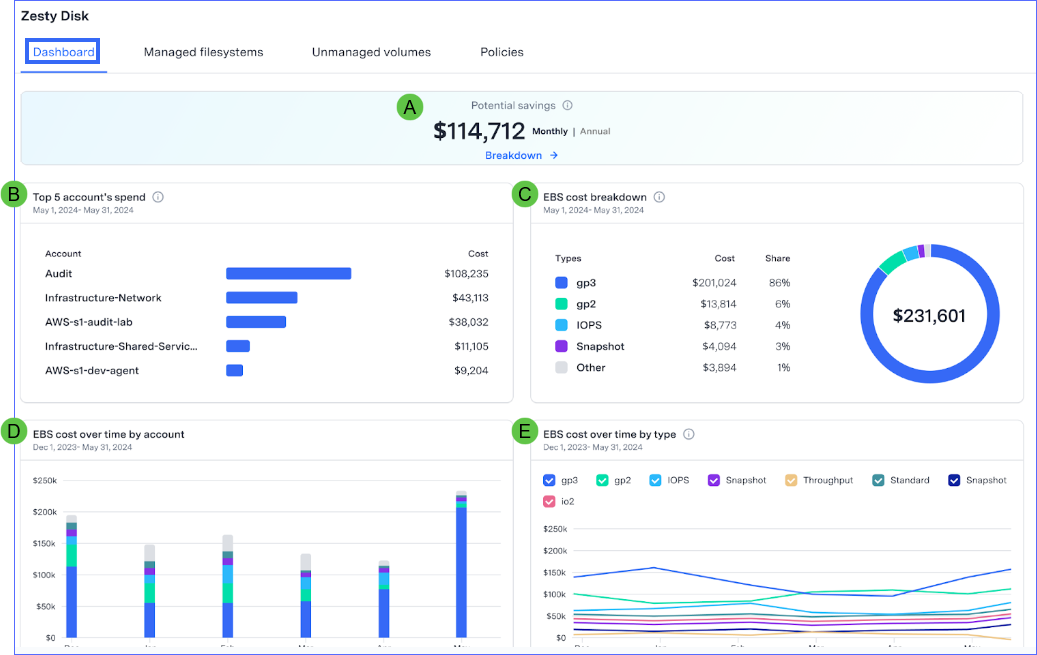
Zesty is an AI-driven cost optimization platform that started with commitment management and storage optimization, and has more recently shifted its core positioning toward Kubernetes optimization (via its Kompass platform).
Features
- Kubernetes optimization platform focus (Kompass).
- Pod scaling / rightsizing coverage (VPA + HPA positioning).
- Storage optimization as part of the stack (historically a key pillar).
- Commitment management offering (Commitment Manager).
Pro(s):
Strong if you want Kubernetes optimization that also ties into storage and commitments, rather than treating cluster efficiency as a standalone problem.
Con(s):
Less “pure Kubernetes autoscaling alternative” in positioning, because it spans commitments + storage + Kubernetes layers, which may be more than you need if you only want cluster automation.
Why choose Zesty over Cast AI? Choose Zesty if you want a Kubernetes optimization platform that still brings commitment management and storage optimization into the savings motion, rather than a Kubernetes-first autoscaling platform focused primarily on cluster/node automation.
7. IBM Turbonomic
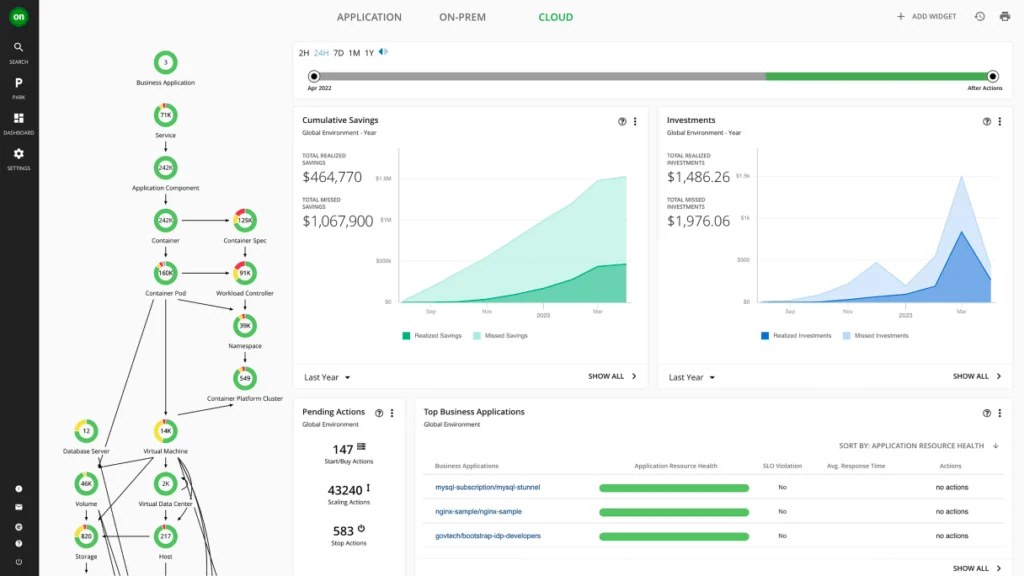
Turbonomic is an enterprise-grade platform that dynamically allocates resources to maintain application performance while optimizing infrastructure costs.
Features
Continuous resource optimization across applications, VMs, containers, and infrastructure.
Automated Kubernetes rightsizing, pod scaling, and placement actions.
Policy-driven automation to balance performance, cost, and compliance constraints.
Hybrid and multi-cloud support (enterprise focus, not Kubernetes-only).
Integration with Kubecost to tie optimization actions to real-time cost impact.
Pro(s):
Strong enterprise-grade automation for hybrid environments where you need performance assurance plus continuous rightsizing beyond Kubernetes alone.
Con(s):
Heavier platform than Cast AI if your scope is “Kubernetes optimization only,” and often oriented toward centralized IT ops vs a Kubernetes-native autoscaler-first experience.
Why choose IBM Turbonomic over Cast AI? Choose Turbonomic if you need cross-stack, policy-driven automation (apps + VMs + containers + Kubernetes) with performance assurance, not just optimization for Kubernetes environments.
8. Apptio Cloudability
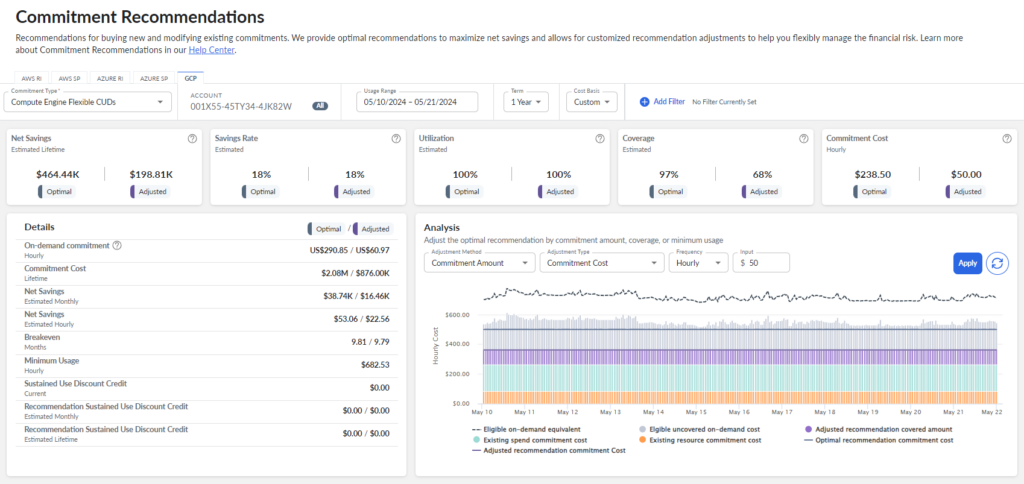
Cloud financial management platform for allocating, monitoring, and managing cloud costs for public cloud spending.
Features
Multi-cloud visibility and reporting across AWS, Azure, and GCP.
Kubernetes container cost allocation for clusters, namespaces, and workloads.
Budgeting, forecasting, and planning workflows for FinOps teams.
Anomaly detection with alerting for unexpected spend changes.
Optimization recommendations including commitment/rightsizing cost insights
Pro(s):
Strong enterprise-grade FinOps for multi-cloud governance, allocation, and reporting (especially when you need a central platform beyond Kubernetes-only).
Con(s):
Does not replace Cast AI’s core Kubernetes infrastructure automation (autoscaling/bin-packing/node orchestration); it’s primarily a FinOps visibility + governance platform with optimization guidance rather than continuous cluster control.
Why choose Apptio Cloudability over Cast AI? Choose Cloudability if you need a multi-cloud FinOps platform for allocation, security, and forecasting (plus Kubernetes allocation), rather than Kubernetes-first autoscaling optimization.
9. Densify (now Kubex)
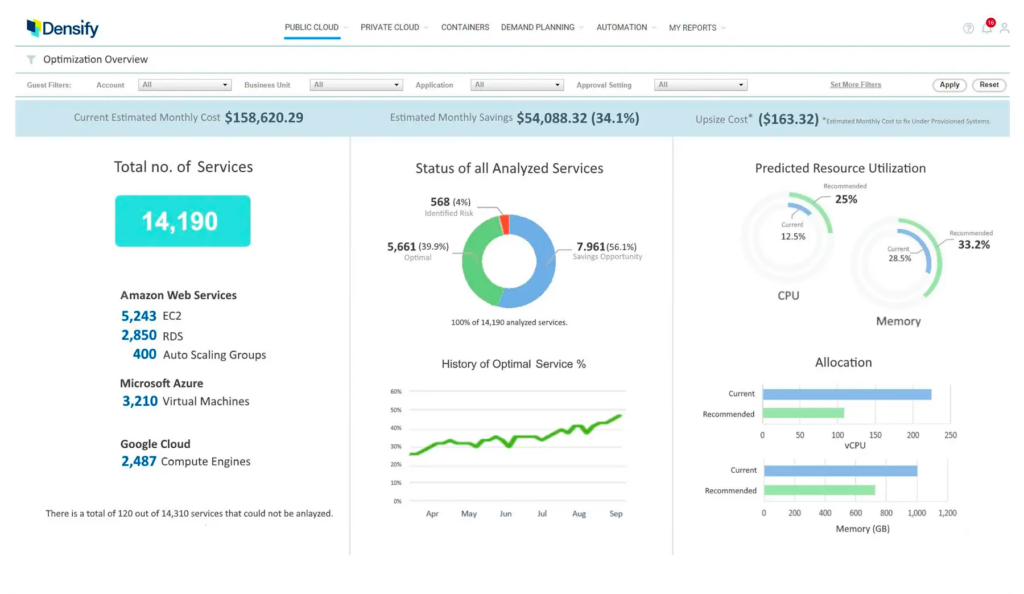
Densify is an AI-driven resource optimization platform that was renamed to Kubex in January 2026, and is positioned as an automated optimization layer for Kubernetes (and increasingly GPU/AI workloads) rather than a Kubernetes autoscaler-first platform like Cast.
Features
Automated resource optimization for Kubernetes workloads
Rightsizing guidance and automated actions to save money while protecting performance
Optimization coverage expanding to GPUs and AI workloads
“AI-first” optimization experience (Kubex AI positioning)
Continuity for existing Densify customers under the Kubex brand (same org/product offerings)
Pro(s):
Strong fit if you want automated Kubernetes (and GPU/AI) resource optimization that’s broader than pure cost monitoring tools like Kubecost.
Con(s):
Less centered on Cast AI’s specific value prop (cluster autoscaling + node orchestration/bin-packing) and more on end-to-end resource optimization and rightsizing automation.
Why choose Densify (Kubex) over Cast AI? Choose Kubex if you want an optimization platform focused on automated rightsizing/resource optimization across Kubernetes (and GPU/AI), rather than a Kubernetes-first autoscaling and node management platform.
10. PerfectScale
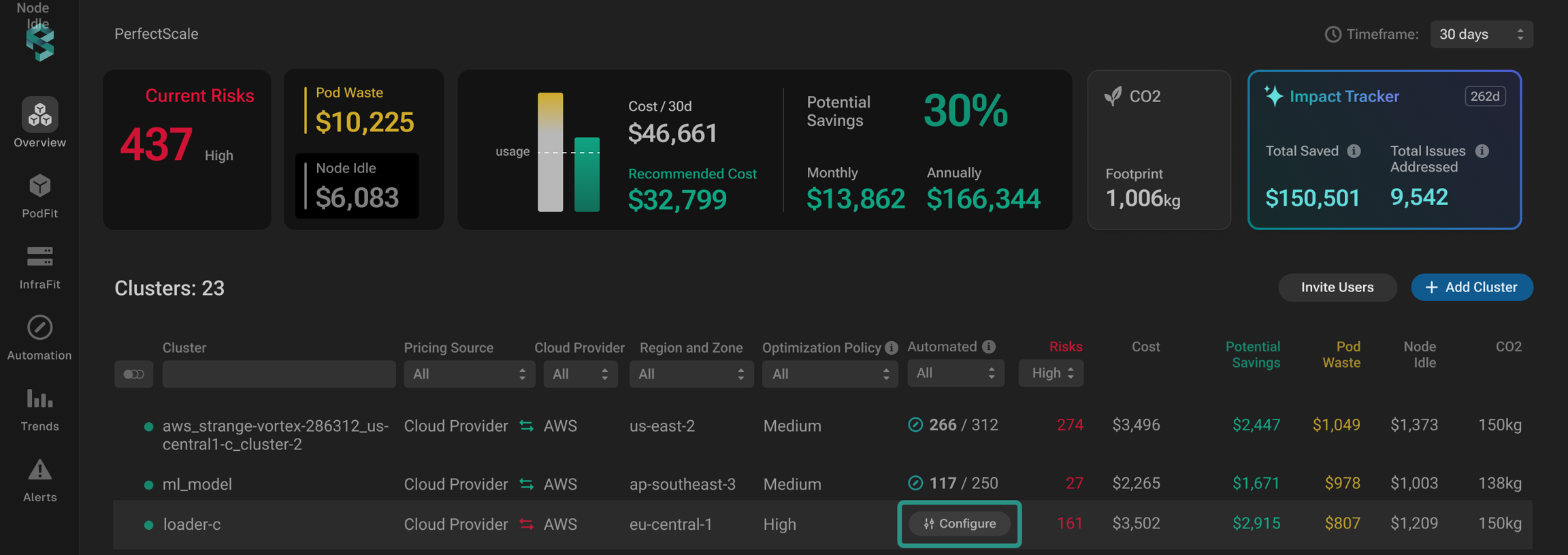
PerfectScale is an AI-powered cloud optimization platform that aims to automatically reduce cloud costs across compute, storage, and containerized workloads through rightsizing and workload-level recommendations for resource allocation — positioned as broader than Kubernetes cost visibility tools like Kubecost, but not as Kubernetes-native continuous automation as Cast.
Features
AI-driven workload rightsizing and resource allocation optimization across compute and containers
Valuable insights and actionable recommendations to reduce costs
Capacity management and utilization analytics
Automated tuning recommendations to reduce overprovisioned resources
Cost forecasting and anomaly detection with machine learning and predictive analytics
Pro(s):
Broad optimization across multiple layers (compute + containers) with AI-driven recommendations.
Con(s):
Doesn’t provide Kubernetes-native autoscaling automation or node orchestration to the same degree as Cast AI.
Why choose PerfectScale over Cast AI? Choose PerfectScale if you want a broader AI-driven optimization platform for cloud and container workloads that emphasizes rightsizing recommendations rather than real-time Kubernetes infrastructure automation.
11. Google Kubernetes Engine (Native Tool)
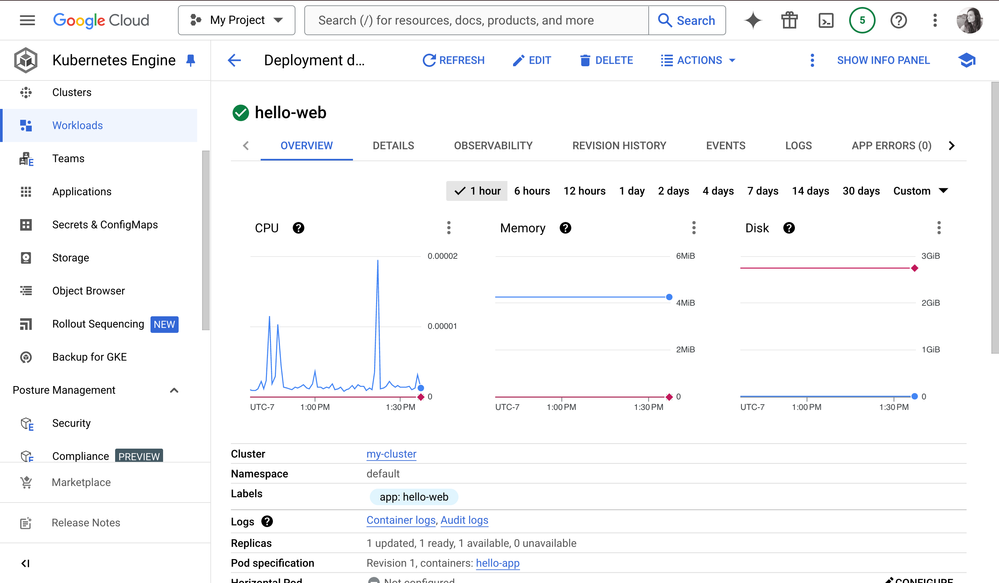
Google Kubernetes Engine (GKE) is Google Cloud’s managed Kubernetes service that includes built-in autoscaling and resource optimization capabilities, offering a native alternative to Cast for teams standardizing on GCP.
Features
Cluster Autoscaler for node pool scaling
Horizontal Pod Autoscaler (HPA) for workload scaling
Vertical Pod Autoscaler (VPA) for rightsizing
Node auto-repair and maintenance
Integrated logging, monitoring, and cost visibility via Cloud Monitoring and Cloud Billing
Pro(s):
Native to GCP with tight integration into Google Cloud tooling and SLAs.
Con(s):
Not a standalone FinOps/cost optimization platform — optimization capabilities are scoped to Kubernetes infrastructure and require engineering setup.
Why choose GKE over Cast AI? Choose GKE if you are standardizing on Google Cloud and want built-in autoscaling/right-sizing without adding a separate optimization platform.
Why nOps Is the Best Cast AI Alternative
If you’re comparing Cast AI alternatives, the real question is where optimization has the greatest financial impact.
nOps automates rate and usage optimization so you can get the best price on everything you spend in the cloud, Kubernetes and otherwise. It’s fully autonomous, freeing engineers to focus on building and innovating.
You only pay from realized savings — so there’s no downside to finding out what’s possible.
Book a free savings analysis and see your potential savings in under 30 minutes.
nOps manages $3 billion+ in cloud costs and was recently rated #1 in G2’s Cloud Cost Management category (4.8/5 user rating).
Demo
AI-Powered Cost Management Platform
Discover how much you can save in just 10 minutes!
Frequently Asked Questions
Let’s dive into a few FAQ about Cast AI competitors.
What is the best Cast AI alternative?
The best Cast AI alternative depends on scope, but nOps stands out for delivering 35–50%+ effective savings rates through automated hourly commitment management. While Cast AI focuses on optimizing Kubernetes autoscaling and cloud architecture, nOps offers full automation for long term commitments, Kubernetes, SaaS, AI, and multicloud spend across environments.
Is nOps better than Cast AI?
If you only need Kubernetes autoscaling, Cast AI may be enough. But for most companies spending $10K+ monthly on cloud, nOps often delivers greater total savings by combining Kubernetes optimization with automated Savings Plans and RI management, targeting higher effective savings across AWS, Azure, and GCP.
Are there open-source Cast AI alternatives?
There is no fully open-source equivalent to Cast AI’s model. Kubecost provides open-source Kubernetes cost visibility, but not autonomous optimization. nOps builds Kubernetes optimization on open technologies like Karpenter, HPA, and VPA, while adding automated commitment lifecycle management on top.
Which platform is best for Kubernetes cost optimization?
For cluster-level autoscaling, Cast AI is Kubernetes-focused. However, nOps combines Kubernetes optimization (leveraging Karpenter, HPA, and VPA) with commitment optimization, targeting 35–50%+ effective savings rates. If reducing total cloud expenditure matters more than just node efficiency, nOps provides broader financial impact.