
Best Reserved Instance Management Tools: Optimize AWS, Azure & GCP
Reserved Instance (RI) management is arguably the biggest savings lever in cloud cost optimization. The difference between a well-managed commitment portfolio and an ad-hoc approach can represent millions in annual savings.
But here's the challenge: managing RIs manually in 2026 is dramatically harder than it was even two years ago. GenAI and Kubernetes workloads spike unpredictably, instance families change quarterly, and multi-cloud architectures mean you're juggling many different commitment types. While dedicated teams can typically reach around 40% savings through manual management, automated tools can easily achieve up to 50% — while freeing up teams for work that actually requires human judgment.
This guide evaluates the top RI management tools available in 2026, comparing their automation depth, risk management, cloud coverage, and pricing models so you can pick the platform that matches your environment.
Why RI Management Matters in 2026
The commitment management landscape has shifted substantially. A few timely forces are driving this:
AI workloads resist traditional commitment planning. ML training jobs spike and crash. Inference scales unevenly. GPU instances don't fit standard commitment categories cleanly. Engineering leaders are hesitant to make multi-year commitments when workload profiles change month to month.
Instance families evolve faster than annual reviews can track. One DevOps manager we spoke with described their challenge: they're migrating databases from R6 and R7 to R8 instance types — but newer generations don't always mean lower prices. The old "new tech, cheaper tech" assumption no longer holds. Every instance migration requires a full cost analysis, and any existing RIs tied to older families need conversion or replacement.
Commitment management is expanding across clouds and services. Managing commitments used to mean tracking EC2 RIs and compute Savings Plans. In 2026, teams are juggling AWS Savings Plans, Azure Reservations, GCP Committed Use Discounts, new database Savings Plans, and a growing set of non-compute discount programs. Each comes with different eligibility rules, coverage models, and tradeoffs.
The throughline is that automated RI management tools are increasingly vital to help teams keep pace with this complexity — continuously evaluating commitment coverage, adapting to workload changes, and reducing the risk of both over-commitment and missed savings.
How We Evaluated RI Management Tools
We assessed each platform across five dimensions that matter most to FinOps teams.
Commitment Optimization
Does the tool automate the full lifecycle — purchasing, exchanging, rebalancing, and renewing commitments? Or does it stop at recommendations requiring manual execution?
Risk Management
How does the platform handle commitment lock-in risk? Key capabilities include short-term commitment layering (buying in small increments rather than large annual blocks), automatic rebalancing as usage shifts, and guarantees or insurance mechanisms that protect against underutilization.
Cloud and Service Coverage
This is where tools diverge significantly. Many RI management platforms only cover EC2 compute — Savings Plans and Reserved Instances for virtual machines. But modern cloud environments run commitments across databases (RDS RIs), analytics services, containers, and increasingly AI/ML workloads. A tool that only optimizes EC2 leaves substantial savings on the table for teams running RDS, ElastiCache, OpenSearch, or Redshift.
We specifically assessed whether each tool supports:
- RIs and Savings Plans (EC2, Lambda, Fargate)
- Database commitments (RDS, ElastiCache, Redshift, OpenSearch)
- Multi-cloud commitment types (Azure Reservations, GCP CUDs)
- Container and Kubernetes workload optimization
Pricing Model
Does the vendor's pricing align with outcomes? Savings-based models charge only on realized savings — if the tool doesn't save you money, you don't pay. Fixed fees or percentage-of-spend models can erode the value they're meant to deliver, particularly at scale.
Visibility and Reporting
We looked for dashboards and reporting that surface savings opportunities, cost trends, utilization patterns, allocation by team or service, anomaly detection, and the impact of optimization actions over time.
Top Reserved Instance Management Tools in 2026
Here are the top tools for automated Reserved Instance management:
nOps
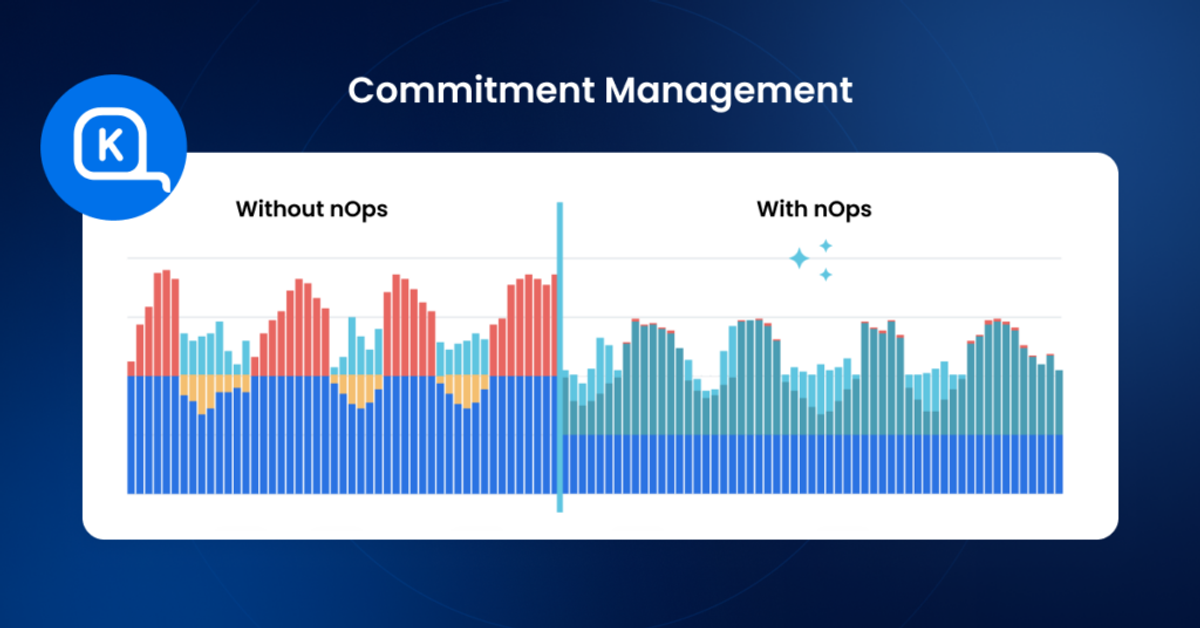
nOps is a FinOps platform that manages over $5 billion in annual cloud spend. Its commitment management capabilities are designed for full automation — purchasing, rebalancing, and renewing commitments continuously without manual intervention. nOps covers compute and non-compute services across AWS, Azure and GCP.
Key RI Optimization Capabilities
nOps automates the full commitment lifecycle, continuously rebalancing commitment portfolios on an hourly basis in response to actual usage trends. It focuses on achieving maximum savings while lowering your lock-in risk, with a savings-first pricing model that ensure you’re paying only for results.
Automation Depth
nOps operates on full autopilot. Commitments are purchased, exchanged, and renewed automatically based on real-time usage data. It leverages adaptive layering and seeding/squishing of convertible RIs to eke out often 20%+ more incremental savings than competitors, while reducing the risk of committing (even for volatile workloads). Setup takes less than five minutes with no infrastructure changes required.
Cloud and Service Coverage:
Full coverage across AWS, Azure, and GCP, including compute, non-compute, Kubernetes, and GenAI workloads.
Ideal For
Organizations that want hands-off commitment optimization with full visibility. Particularly strong for teams running volatile or rapidly changing workloads — nOps manages the risky commitments you don’t want to touch, while your team gets credit for the increased savings.
Pros:
- Industry-leading savings rates that often reach 20% higher than competitors
- Adaptive layering shrinks commitment windows down, reducing risk without sacrificing savings
- No work required — nOps manages your commitments end-to-end
- Full visibility features covering all key areas — from reporting to anomaly detection to FinOps AI agent
Cons:
- Doesn’t focus on workload optimization, though it is compatible with it
Pricing Model
nOps charges a percentage of the savings it generates. You pay only when you save. You can book a free savings analysis to see if your team can benefit.
ProsperOps

ProsperOps, recently acquired by Flexera, focuses specifically on automating commitment management for Reserved Instances and Savings Plans. It uses what they call Autonomous Discount Management (ADM) to continuously adjust your commitment portfolio without manual intervention.
Key RI Optimization Capabilities:
- Automated purchasing and management of RIs and Savings Plans
- Coverage across EC2, RDS, and other commitment-eligible services
- Portfolio-level optimization rather than account-by-account decisions
Automation Depth: Full automation. ProsperOps manages the entire commitment lifecycle — purchasing, exchanging, and letting commitments expire when usage drops. Operates multiple times per day.
Cloud and Service Coverage: AWS, Azure, and GCP. ProsperOps covers services beyond EC2, making it suitable for companies with workloads across different resource types.
Ideal For: Teams that want a dedicated commitment management solution without bundled visibility or governance features — particularly those comfortable with a pure-play specialist.
Pros:
- Commitment automation with multi-cloud support including Azure and GCP
- Straightforward onboarding experience
- Covers multiple AWS service types, not just EC2
Cons:
- No spot instance management, rightsizing, or resource scheduling
- Visibility is limited to commitment reports — no broader cost allocation
- Doesn't provide governance, budgeting, or tagging capabilities
Pricing: Contact for pricing. Typically a percentage of savings delivered.
CloudHealth by Broadcom (formerly VMware)

CloudHealth is an enterprise cloud management platform acquired by Broadcom (via VMware). It provides broad multi-cloud cost visibility with RI and Savings Plan recommendations as one component of a larger governance suite.
Key RI Optimization Capabilities:
- RI and Savings Plan utilization tracking and recommendations
- Coverage and utilization reporting with alerts
- Support for AWS Reserved Instances and Azure Reservations
Automation Depth: Limited. CloudHealth generates recommendations but requires manual execution of RI purchases. Policy-based governance actions exist for other cost activities, but commitment purchasing remains manual.
Cloud and Service Coverage: For visibility, AWS, Azure, GCP, OCI, and Alibaba Cloud — the broadest cloud coverage in this list. However, RI optimization depth is relatively shallow compared to automation-first tools and covers only AWS and Azure.
Ideal For: Large enterprises that need multi-cloud governance, chargeback, and compliance alongside basic commitment recommendations — particularly those already in the Broadcom/VMware ecosystem.
Pros:
- Broadest multi-cloud support for visibility only (5+ clouds)
- Strong governance, policy engine, and compliance features
- Mature chargeback and showback capabilities
- Large user community and established vendor
Cons:
- Commitment management is recommendation-only — no automated purchasing or rebalancing
- Enterprise complexity; typically requires dedicated FinOps resources to operate
- Broadcom acquisition has introduced licensing uncertainty for some customers
Pricing: Percentage of managed cloud spend plus enterprise licensing.
Apptio Cloudability

Cloudability (now part of IBM via the Apptio acquisition) is an enterprise FinOps platform with strong cost allocation and reporting. Its commitment management capabilities include automated purchasing and rebalancing, though historically its strength has been visibility over optimization.
Key RI Optimization Capabilities:
- Automated commitment purchasing and rebalancing (add-on feature "Cloudability Savings Automation")
- RI usage analytics with coverage modeling
- Strong showback and chargeback for commitment-derived savings
Automation Depth: Moderate. Cloudability offers automated purchasing as an add-on, with portfolio tracking.
Cloud and Service Coverage: AWS (primary), Azure, and GCP. Kubernetes cost visibility is available via the IBM-acquired Kubecost integration.
Ideal For: Large enterprises (Fortune 500) that need enterprise-grade cost allocation, governance, and reporting — and want commitment management integrated into a broader FinOps platform rather than a standalone tool.
Pros:
- Enterprise-grade cost allocation and reporting
- Strong governance with budgets, alerts, and tagging enforcement
- Battle-tested at scale for visibility (hundreds of millions in managed spend)
- IBM/Apptio backing provides long-term vendor stability
Cons:
- Commitment management is an add-on, not the core product
- Steeper learning curve noted by multiple users
- Automation depth lags behind dedicated commitment tools
- Kubernetes support requires separate Kubecost integration
- Pricing starts around $30K/year with additional fees for commitment management features
Pricing: Percentage of managed spend (tiered). Starts approximately $30K/year. Commitment management is an additional module.
Zesty

Zesty focuses on automated cloud resource optimization, including RI and Savings Plan management alongside EBS storage optimization and dynamic resource adjustment. It's built for AWS-first environments.
Key RI Optimization Capabilities:
- Automated RI and Savings Plan purchasing and management
- Dynamic resource adjustment based on usage patterns
- EBS volume optimization (GP2 to GP3 migration, right-sizing)
Automation Depth: High for its focus areas. Zesty automates commitment purchases and adjustments, plus provides real-time workload management for spot instances. The platform will refund a portion of its management fee for unused commitments — though not a full RI utilization guarantee.
Cloud and Service Coverage: AWS primary. Zesty's strength is depth within AWS compute and storage rather than breadth across multiple clouds or service types.
Ideal For: AWS-only teams that want compute + storage optimization in a single platform.
Pros:
- Strong compute and storage optimization combined
- Automated spot instance management alongside RIs
- Intelligent instance selection for workload placement
- Partial refund mechanism for unused commitments
Cons:
- AWS-only — no Azure or GCP commitment management
- Cost visibility and allocation capabilities are basic
- No governance, budgeting, or tagging features
- Narrower service coverage compared to broader platforms
Pricing: Contact for pricing. Savings-based model reported by users.
Spot Eco / Spot by Flexera / Spot by NetApp / Spot.io
Spot Eco, a module that automates the management of Reserved Instances and Savings Plans. It sits within Spot's broader portfolio that includes spot instance management (Ocean for Kubernetes, Elastigroup for VMs) and was acquired by Flexera in 2025.
Key RI Optimization Capabilities:
- AI-driven analysis of current, projected and historical usage patterns for commitment purchasing
- Automated RI and Savings Plan lifecycle management
- Ability to link Savings Plans on and off customer accounts
- Portfolio rebalancing across commitment types
Automation Depth: High. Eco uses continuous AI analysis to manage the full commitment lifecycle hands-free, purchasing and adjusting RIs/SPs based on predicted usage patterns.
Cloud and Service Coverage: AWS (primary), with expanding multi-cloud capabilities through the Flexera acquisition. Azure reservations are supported. GCP CUD management is evolving.
Ideal For: Teams already in the Spot/NetApp or Flexera ecosystem who want commitment management integrated with spot instance orchestration — particularly Kubernetes-heavy environments using Ocean.
Pros:
- Strong integration with Spot's broader optimization suite (Ocean, Elastigroup)
- Hands-free commitment management with AI-driven decisions
- Kubernetes-native optimization via Ocean
- Flexera acquisition provides multi-cloud path
Cons:
- Works better as part of the broader Spot suite rather than standalone
- Multi-cloud commitment management still maturing
- Pricing can be complex with multiple modules
- Independent product direction unclear post-Flexera acquisition
Pricing: Pay-as-you-go monthly plan with no annual commitment, or negotiated enterprise pricing. Typically a percentage of savings or managed spend.
Harness Cloud Cost Management

Harness CCM is part of the Harness software delivery platform, adding FinOps capabilities alongside CI/CD and feature flags. It includes a Commitment Orchestrator for RI/SP management and AutoStopping for idle resource elimination.
Key RI Optimization Capabilities:
- Commitment Orchestrator for RI and Savings Plan management
- AI-powered usage analysis and recommendations
- Atomization feature (monthly RI expiration granularity vs. annual)
- Integration with broader Harness platform for deployment-aware cost decisions
Automation Depth: Moderate. The Commitment Orchestrator provides basic orchestration, but Gartner Peer Insights reviews suggest real-world results have been mixed — with some users reporting difficulty achieving effective reporting or cost savings from automation features.
Cloud and Service Coverage: AWS, Azure, and GCP. AutoStopping works across providers for development environments.
Ideal For: Teams already using Harness for CI/CD that want cost management integrated into their delivery platform — particularly those prioritizing dev/test savings via AutoStopping.
Pros:
- Integrated with CI/CD pipeline for deployment-aware decisions
- AutoStopping provides immediate savings on idle dev/test resources
- Multi-cloud support
- Good Kubernetes cost visibility
Cons:
- Commitment management is less mature than dedicated tools
- User reviews indicate uneven results in practice
- Requires Harness platform buy-in for full value
- Commitment automation depth limited compared to ProsperOps or nOps
Pricing: Free tier available. Paid plans based on managed cloud spend. Contact for enterprise pricing.
Finout
Finout positions itself as a "FinOps for the Agentic Era" platform — an agentless tool focused primarily on cost visibility, allocation, and anomaly detection. It uses AI to allocate both tagged and untagged spend across cloud, Kubernetes, AI, and SaaS workloads.
Key RI Optimization Capabilities:
- Commitment utilization and coverage tracking
- Discount and commitment modeling (Savings Plans and Reservations)
- Anomaly detection for commitment-related cost changes
- AI cost management for model APIs and GPU workloads
Automation Depth: Low for commitment management specifically. Finout's strength is visibility and allocation — it helps you model and track commitments rather than automatically purchasing or managing them. Think of it as the reporting layer that complements a dedicated commitment tool.
Cloud and Service Coverage: Multi-cloud (AWS, Azure, GCP) plus SaaS, Kubernetes, and AI workloads. Particularly strong in attributing AI/LLM spend — an emerging need that most RI-focused tools don't address.
Ideal For: Teams that need strong cost allocation and unit economics across cloud + AI workloads, and want commitment visibility without automated optimization — or as a complement to a dedicated commitment tool that handles purchasing.
Pros:
- Strong multi-cloud and AI/SaaS cost visibility
- Agentless architecture with no code deployment
- Virtual tagging handles untagged resources effectively
- Fast setup and time-to-value for reporting
Cons:
- Not a commitment automation tool — doesn't purchase or manage RIs/SPs
- Visibility-first approach means you still need a separate optimization solution
- Limited governance capabilities compared to enterprise platforms
Pricing: Contact for pricing. Reported as percentage-of-spend model.
How to Choose the Right RI Management Tool
Now that we've gone through the list of best tools to maximize cost savings for commmitments, let's discuss a few factors that may play into choosing the best platform for your needs:
Startup vs. Enterprise Needs
If you're a startup or mid-market company with $100K-$1M in monthly cloud spend, you likely need a tool that delivers savings quickly without extensive setup. Platforms like nOps (with its savings-first pricing and no-upfront-cost model) or ProsperOps (focused onboarding) are designed for this. You don't want to spend three months configuring governance policies before seeing your first dollar saved.
Enterprises running $10M+ in annual cloud spend typically need robust cost allocation, chargeback to business units, and governance controls alongside commitment optimization. Cloudability or CloudHealth provide this — though you may pair them with a dedicated automation tool for the commitment layer specifically.
Single-Cloud vs. Multi-Cloud
If you're AWS-only and plan to stay that way, you have the widest selection. Zesty, nOps, and ProsperOps all provide deep AWS commitment automation.
For true multi-cloud environments (running meaningful spend across AWS + Azure + GCP), your options narrow. ProsperOps and nOps both support multi-cloud commitments. CloudHealth covers the most cloud providers for visibility, but lacks automation. Be specific about what "multi-cloud support" means for each vendor — some support multi-cloud reporting while only automating commitments on AWS.
Automation-First vs. Reporting-First
This is the fundamental fork in the decision tree:
Automation-first (tool handles commitments without involvement): nOps, ProsperOps, Zesty, Spot Eco. These purchase, exchange, and rebalance continuously, and, where applicable, use the AWS RI Marketplace to reduce exposure from unused commitments.
Reporting-first (visibility and recommendations, team executes): CloudHealth, Cloudability, Finout. Works if you have dedicated FinOps staff who want control.
The practical middle ground? Many organizations run an automation-first tool for commitments paired with a reporting-first platform for cost allocation and governance.
Automate Reserved Instance Management with nOps
Maximizing savings and minimizing risk requires continuously adjusting coverage, duration, timing and commitment mix as your usage changes.
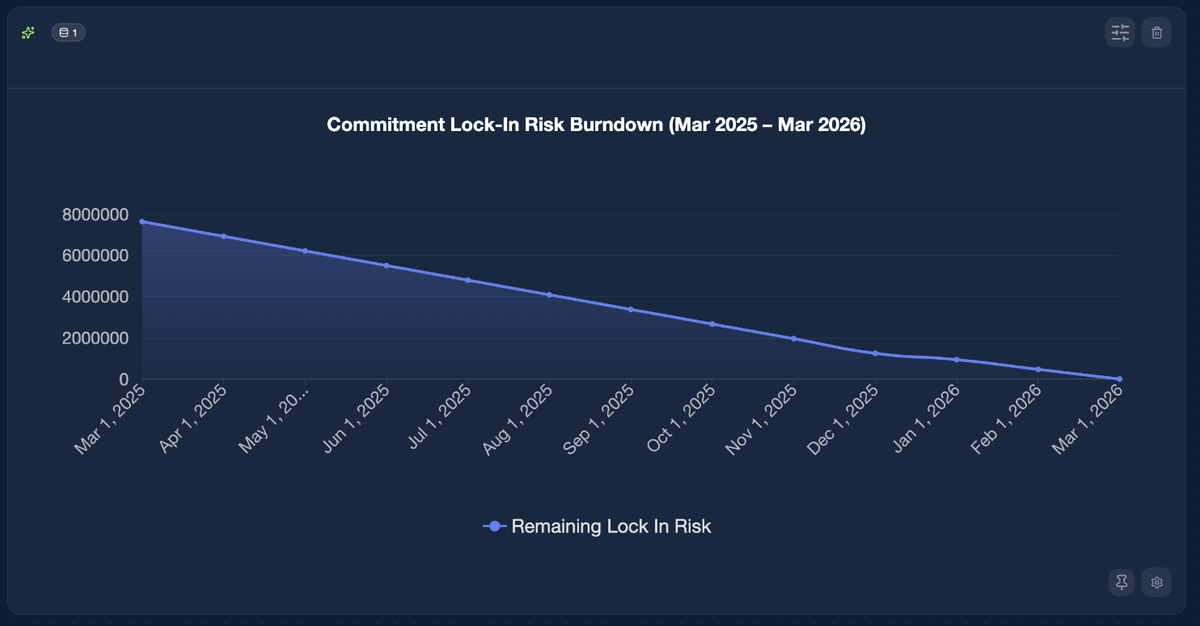
nOps automated Commitment Management employs all of the strategies included in this list to minimize your Commitment Lock-In Risk while maximizing your Effective Savings Rate.
- Maximize discounts with ML-powered automation: Push discounts up to 55% with commitment layering that adapts to your usage every hour
- Maximize flexibility: Instead of one big batch of 3-year Compute Savings Plans, nOps builds a mix, committing in small increments each hour and adjusting as needed. The result: teams slash their risk and commitment windows. Track and watch your Commitment Lock-In Risk go down in the nOps platform:
- Savings-first model: nOps only gets paid if we save you money — meaning there’s no upfront cost or financial risk. Customers have described it as being like “picking $20 bills off the ground” — there’s no downside to seeing if you can reduce costs with a free savings analysis.
nOps is entrusted with $5 billion in cloud spending and was recently rated #1 in G2’s Cloud Cost Management category.
Demo
AI-Powered Cost Management Platform
Discover how much you can save in just 10 minutes!
Book a Demo
FAQ
Let’s discuss a few FAQ about Azure, GCP and AWS Reserved Instance Management, purchasing RIs, and how you can achieve significant savings with automated platforms.
Can RI management be fully automated?
Yes. Tools like nOps and ProsperOps automate the entire lifecycle — purchasing, exchanging, and rebalancing commitments continuously. Automated platforms adjust multiple times per day, while manual processes typically review quarterly at best.
Which cloud providers support Reserved Instances?
AWS offers RIs (EC2, RDS, ElastiCache, Redshift, OpenSearch) and Savings Plans for AWS usage. Azure provides Reservations across VMs, SQL Database, and Cosmos DB. GCP offers Committed Use Discounts for compute and managed services. Each RI portfolio has different term lengths, payment options, operating system considerations, and flexibility trade-offs.
What is the biggest risk in RI management?
Over-commitment — purchasing capacity you don’t end up using. The solution is incremental purchasing (small commitments tracking demand) combined with platforms that automatically exchange or expire commitments when usage drops. Visibility is also key for AWS cost management, and third-party platforms can help provide additional functionality beyond native tools like AWS cost explorer.
Why is RI management important for Kubernetes environments?
Container workloads on EKS, ECS, or GKE still run on instances that benefit from commitment discounts. But dynamic pod scheduling makes traditional RI planning difficult. Tools with Kubernetes awareness can factor container patterns into commitment decisions.