Skip to content


re:Invent is always the week when AWS ships a year’s worth of roadmap in a few days, and 2025 was no exception. Between new chips, new pricing models, and a wall of AI launches, it was a lot to keep up with—especially if you care about real-world FinOps and platform impact more than the keynote theatrics.
We’ve rounded up what actually mattered from re:Invent 2025: what we heard on the ground from customers, where AWS is pushing the platform next, and which launches are most likely to affect how you build, scale, and control costs in the cloud.
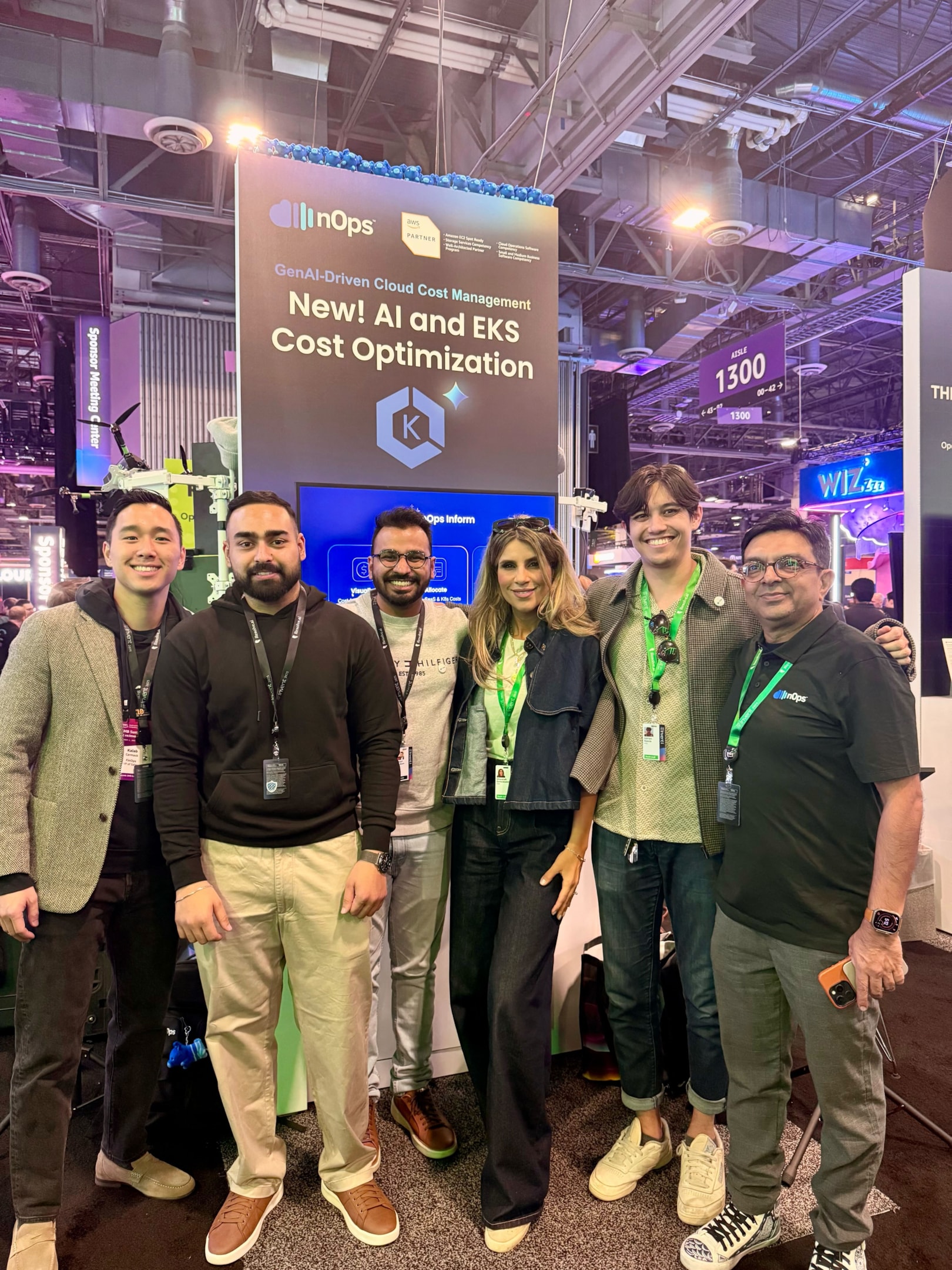
nOps at re:Invent
Check out the major updates nOps launched on the show floor this year:
End-to-end EKS Optimization
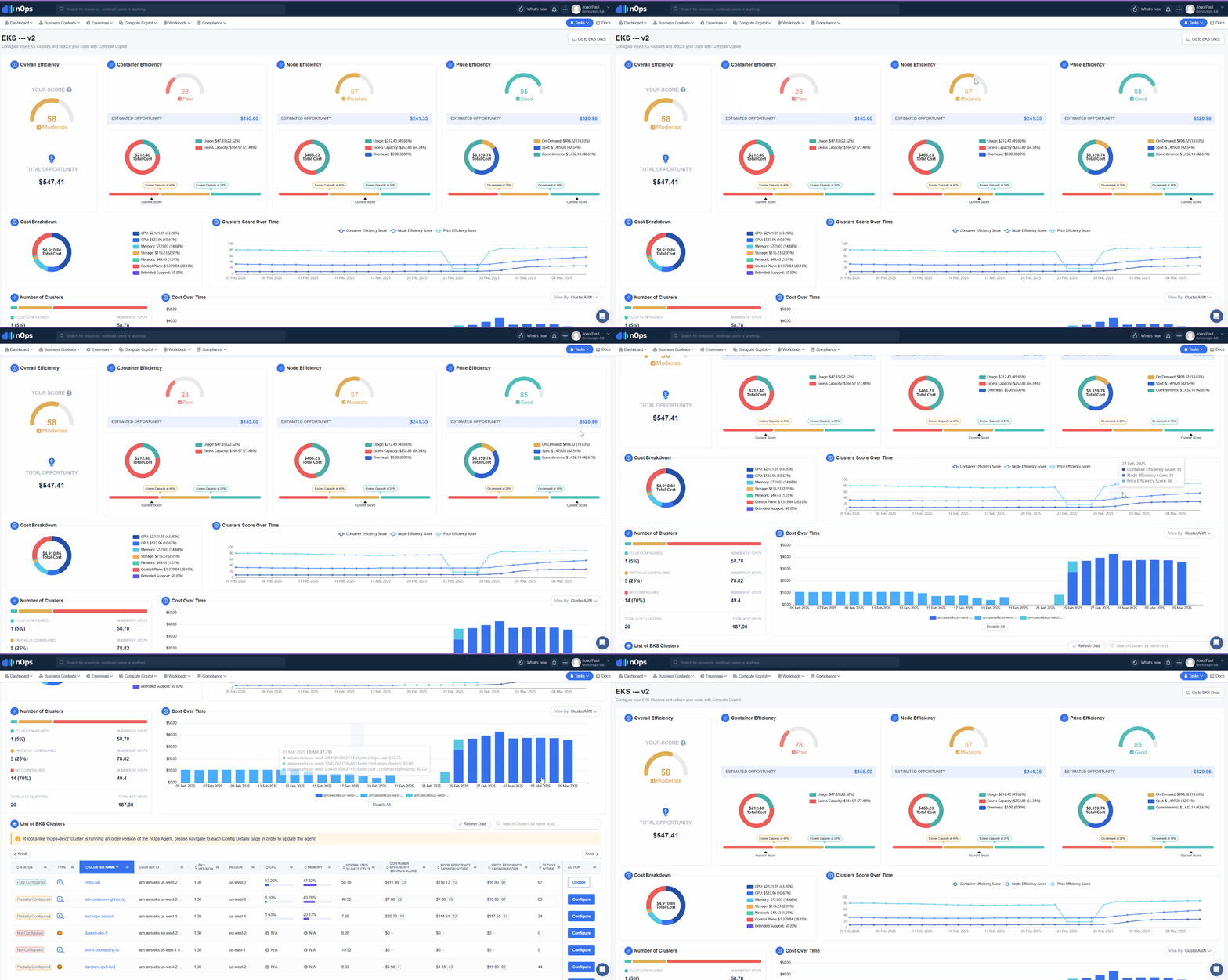
Kubernetes teams are stuck between overprovisioned clusters, underutilized containers, and a maze of pricing levers across On-Demand, Spot, and commitments. At re:Invent, we showcased the new nOps EKS optimization platform, which is the only solution on the market to bring ALL of these pieces together in a single, open-source–based solution built on Cluster Autoscaler and Karpenter. nOps gives you deep visibility into clusters, containers, and pricing, then automatically rightsizes pods, tunes your autoscaler, and orchestrates the blend of On-Demand, Spot, and commitments to cut EKS costs by up to 60–70%. Because it rides on open source, there’s no vendor lock-in, and you can turn optimization on or off without re-architecting your clusters. You can watch a 2-minute interactive demo or book a personalized demo.
AI-Driven Commitment Management For Near-100% Discount Coverage
Engineering and FinOps teams tell us the same thing: buying Savings Plans for stable baseline usage is easy; it’s the spiky, hard-to-forecast spend that isn’t worth the time and risk. And now, nOps Commitment Management 2.0 is pushing discounts even higher. It continuously adjusts coverage in small increments as usage moves — so more of your bill is discounted without big, one-way bets or manual buying cycles. You get near-100% coverage on eligible workloads, with the economics of long-term commitments but far less lock-in. Because pricing is savings-based, there’s no possible downside—if nOps doesn’t find more savings on your variable spend, you pay nothing. View an interactive product demo or get a personalized demo to see how much you will save.

New AWS announcements at re:Invent
Here’s our roundup of the AWS launches that are most likely to change how you architect, operate, and pay for your cloud over the next year.
FinOps & Cost Optimization
This section covers the launches that directly change how you buy, run, and right-size AWS—new savings models, more efficient compute, and better telemetry for finding waste.
Database Savings Plans for AWS Databases
This got one of the biggest reactions at re:Invent: Database Savings Plans give customers a single, flexible commitment that applies across engines like RDS, Aurora, DynamoDB, ElastiCache, Neptune, and DocumentDB, instead of juggling separate RI portfolios per service. It’s a meaningful win for FinOps teams: simpler commitments, less lock-in to a specific engine or instance family, and a much easier way to forecast and manage database spend.
Graviton5: next-gen price-performance for EC2
AWS introduced Graviton5, its fifth-generation Arm CPU, with new instances designed to deliver significantly higher performance than the previous Graviton generation. The chip is aimed at improving price-performance across a broad range of workloads, from microservices to data processing and in-memory databases.
Trainium3 UltraServers and P6e-GB300 UltraServers
On the AI side, AWS focused heavily on lowering the unit cost of training and serving large models. Trainium3 UltraServers can scale to very large accelerator fleets and are positioned as delivering multiple times the performance for large-scale AI workloads, translating directly into better $/token economics. In parallel, high-end NVIDIA GB300–based UltraServers became generally available, pushing the frontier for frontier-model training while making very high-end AI runs more cost-efficient per unit of work.
Amazon S3 Storage Lens: deeper performance & cost telemetry
S3 Storage Lens gained new capabilities like performance metrics, support for analyzing billions of prefixes, and direct export to Amazon S3 Tables. That turns Storage Lens into more than just a capacity and cost view—it becomes a way to understand hot prefixes, skewed access patterns, and noisy tenants at massive scale.
Intelligent-Tiering and replication for Amazon S3 Tables
AWS added Intelligent-Tiering support and built-in replication to Amazon S3 Tables, its Apache Iceberg–native table format on S3.
Amazon S3 Vectors: cheaper vector storage at massive scale
Amazon S3 Vectors brings native support for storing and querying vector embeddings directly in S3. It’s aimed at use cases like RAG, semantic search, and agentic workloads, with a focus on using low-cost object storage as the underlying substrate. From a cost and efficiency perspective, this lets teams consolidate vector storage on top of their existing S3 footprint instead of standing up and operating separate vector database clusters.
Amazon OpenSearch Service: GPU-accelerated, auto-optimized vector indexes
OpenSearch Service added GPU-accelerated indexing and auto-optimized vector indexes for large-scale workloads. The new capabilities are designed to build and serve vector databases faster and at lower cost, while auto-optimization continuously tunes indexes for the right balance of accuracy, latency, and resource usage.
AWS Lambda Managed Instances and Lambda durable functions
Lambda Managed Instances let you run Lambda functions on EC2 capacity while keeping the familiar serverless operational model. That means you can tap into EC2 pricing models (including Savings Plans and Spot) and specialized hardware without managing the instances directly.
AI & ML platform
Here we look at how AWS is reshaping its AI stack, from new model families and customization options to the infrastructure patterns that make large-scale AI more practical to operate.
Amazon Nova 2 and Nova Forge
AWS used re:Invent to reposition Nova as its core model family: Nova 2 Lite for fast, cost-effective reasoning, Nova 2 Sonic for speech-to-speech conversations, and Nova 2 Omni for multimodal inputs and outputs. Nova Forge sits on top as a way for customers to build their own frontier-grade variants, embedding domain-specific knowledge without starting from scratch on training infrastructure.
AWS AI Factories
AI Factories bring fully managed AI infrastructure into customer data centers, combining Trainium, GPU-based systems, storage, and networking under the same control plane as the public cloud. The pitch is to give regulated and sovereignty-sensitive customers “AWS-like AI” where their data already lives, without asking them to design or operate the underlying hardware.
Amazon Bedrock: more open-weight models and smarter customization
Bedrock expanded its catalog with a larger set of fully managed open-weight models from providers like Mistral, NVIDIA, Qwen, and others. On top of that, AWS added reinforcement-style fine-tuning and other customization options that lean heavily on feedback signals instead of large labeled datasets.
Amazon Nova Act: agents for UI workflow automation
Nova Act moved to center stage as AWS’s service for building agents that can reliably operate in a browser—filling forms, performing searches, extracting data, or running QA workflows. The emphasis is on reliability and replayability for enterprise use cases rather than one-off demos, with APIs to define allowed actions and guardrails. For teams trying to automate manual UI work without rewriting legacy systems, this becomes a key building block.
SageMaker AI and HyperPod: training at scale with less ops overhead
SageMaker introduced checkpointless and elastic training options, along with more serverless-style customization flows. These features are aimed at making large-scale training and fine-tuning more resilient to failures and more flexible as capacity fluctuates, without requiring teams to hand-manage checkpoints and cluster topology.
Modernization, operations & security
This section focuses on the services aimed at modernizing legacy applications, streamlining day-two operations, and improving security posture without adding more operational drag.
AWS Transform: AI-powered application modernization
AWS Transform uses AI to analyze large codebases and automate repetitive refactors, with dedicated paths for custom apps, Windows, and mainframe workloads. The goal is to shorten modernization timelines by applying consistent patterns across repos and offloading much of the boilerplate change and testing work.
AWS DevOps Agent and Bedrock AgentCore
AWS DevOps Agent is positioned as an on-call assistant that pulls signals from tools like CloudWatch, GitHub, and ServiceNow to help triage incidents and suggest actions. Bedrock AgentCore adds stronger policy controls, quality checks, and memory, so teams can define what agents are allowed to do and measure whether they’re actually improving incident response.
AWS Security Agent, GuardDuty, and Security Hub
Security Agent brings AI assistance into design reviews and code analysis, while GuardDuty expands threat detection coverage across EC2 and ECS.
Amazon CloudWatch: unified data management and analytics
CloudWatch introduced a unified data store for operational, security, and compliance logs, with automatic normalization and built-in analytics. By centralizing ingestion instead of duplicating data across multiple tools and pipelines, teams can cut observability spend while making it easier to correlate performance, reliability, and security signals in one place.
Amazon EKS enhancements for orchestration and resource management
New EKS capabilities aim to take more of the undifferentiated plumbing out of Kubernetes by handling more orchestration and cloud resource wiring for you. Platform teams can lean more on declarative policies and desired states, and less on hand-rolled glue code and cluster maintenance.
Scenes from re:Invent with nOps
Beyond the product news, here’s what the week in Vegas actually looked like with nOps.

Welcome party at the Wynn
The week started on Monday, December 1, with a kickoff we co-hosted with AWS and Caylent at the Wynn. It brought together engineering, platform, and FinOps leaders to talk through the big themes for the week—AI moving into production, tightening budgets, and the growing need to keep cloud environments efficient as they scale.

Keynotes: Matt Garman, Swami, and Werner set the tone
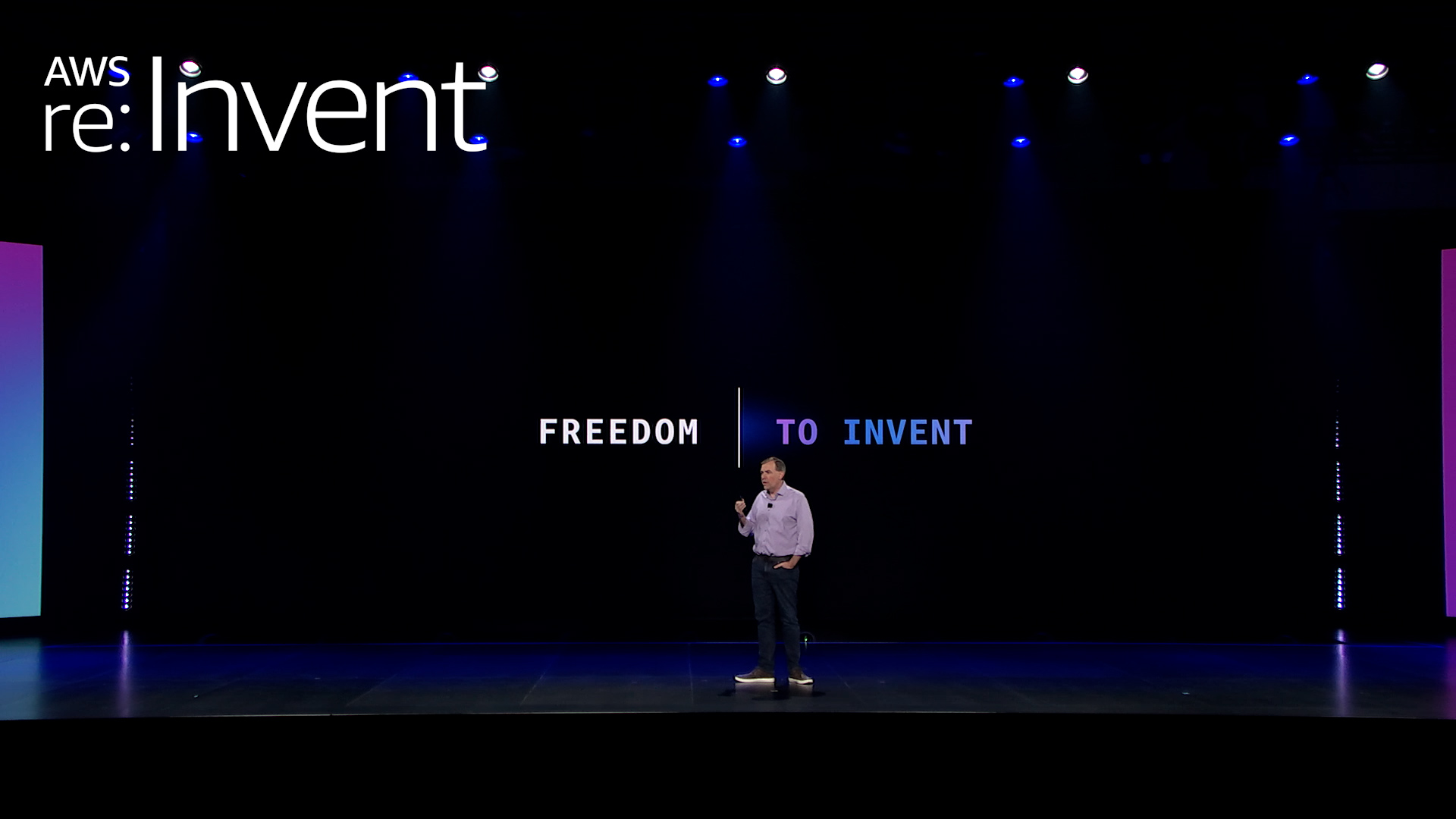
The opening keynote from AWS CEO Matt Garman focused on AI agents, the Nova 2 model family, and next-gen infrastructure like Trainium3 and Graviton5, framed around “AI agents will be bigger than the internet.” Later keynotes from Dr. Swami Sivasubramanian (agentic AI and Bedrock/Nova updates) and Dr. Werner Vogels (closing developer/architecture keynote) dug into how to actually build and run these systems on AWS at scale.
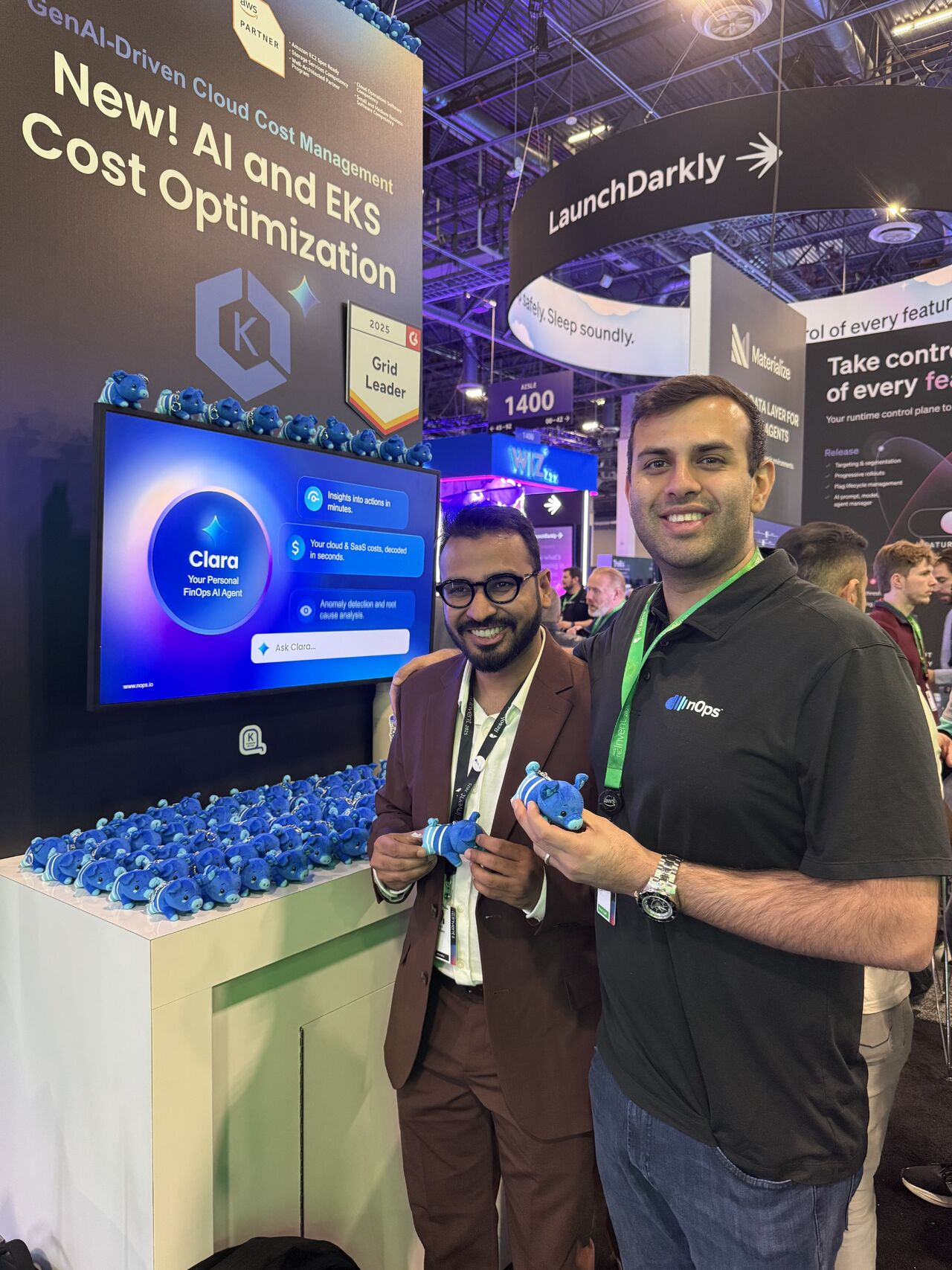
Booth #1234: nOps penny and Sphere tickets
nOps was on the floor at Booth #1234! We handed out swag themed on the nOps Penny mascot, G2 stopped by to hand us a fresh Grid Leader badge, and we ran a light-touch Sphere ticket raffle to keep things fun. Most of the conversations at the booth, though, were about real cost challenges—untangling commitments, bringing EKS costs under control, and understanding how new AI workloads were starting to reshape AWS bills.
Hands-on with nOps: Interactive demos and Playground
For teams who wanted something more concrete than a quick booth chat, we used short interactive product demos and the new nOps Playground, which lets you explore the platform with demo data. That’s where we showed how commitment management and EKS optimization actually look in a dashboard: visibility, allocation, and continuous optimization, without having to connect a production AWS, Azure, or GCP account on the spot.
Wrapping up
Now that re:Invent 2025 is in the books, huge thanks to AWS for organizing a world-class event. We loved connecting with so many of you at the nOps booth and throughout the week — if you missed re:Invent this year or if we didn’t get a chance to meet onsite, feel free to book a call to chat with one of our AWS experts.
nOps manages $2 billion in AWS spend and was recently rated #1 in G2’s Cloud Cost Management category.