
What Is TokenOps? (2026)
AI bills don't work like cloud bills. They grow with every prompt, retrieval, and agent step, so one user request can trigger dozens of billed model calls, and invoices show only an aggregate total. The FinOps Foundation's practitioner survey identified managing token cost and use in SaaS-model AI as the top challenge facing FinOps practitioners today. This guide covers what TokenOps is, what drives token costs, how it differs from FinOps and token economics, and what the work involves.
TokenOps defined
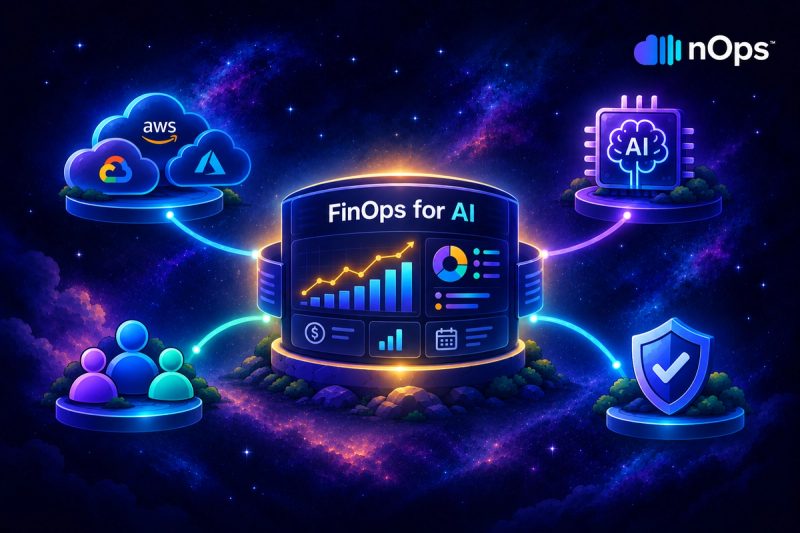
TokenOps is the practice of tracking, allocating, and governing the LLM tokens an organization consumes. It applies FinOps discipline to AI spend: every model call is billed per token, so the practice attributes that spend to the teams, features, and customers behind it and holds it to a budget.
The term is also used by crypto platforms that manage token vesting, airdrops, and cap tables. This page covers the AI meaning only.
Why TokenOps matters now
Per-token prices have fallen, but total bills have not followed. Cheaper tokens encourage more usage, and agents and reasoning models consume far more tokens per task than a single chat prompt.
Measurement has not kept up. In the State of Tokenomics 2026 survey, 43% of companies named proving value as their top challenge, and visibility and attribution of spend ranked second at 27%. Companies with clearly defined ownership of AI economics were 3.7 times more likely to show their CFO a measurable AI outcome.
What drives token costs
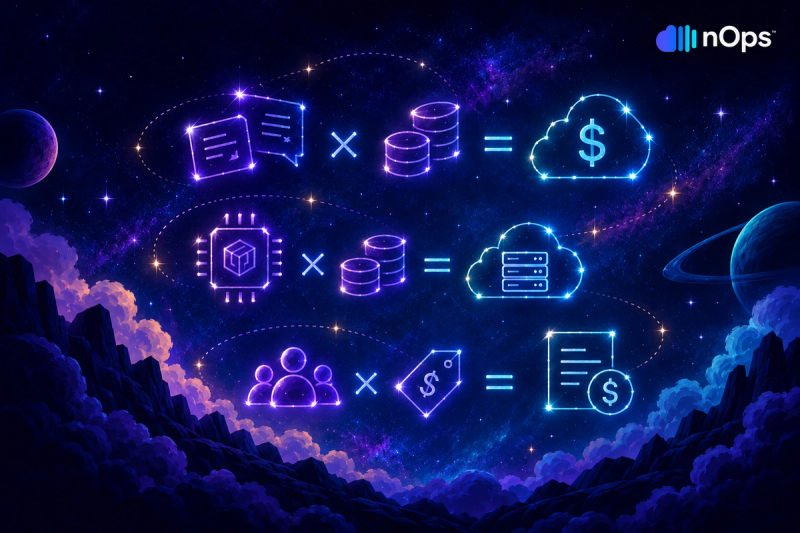
A token bill has two variables: what each kind of token costs, and how many tokens an application uses. Providers set the first. Prompt design, model choice, and application architecture set the second.
Token types
Token spend has four billable parts:
- Input tokens: the prompt, system instructions, and any retrieved context.
- Output tokens: the model's response, typically priced higher than input.
- Cached tokens: reused input, billed at a discount.
- Reasoning tokens: hidden deliberation steps, billed at the output rate and never shown in the answer.
Cost drivers
Five factors raise how many tokens an application uses or what each one costs:
- Prompts and context. System prompt overhead is billed on every call, and conversation history is resent with it, so cost grows as conversations get longer.
- Model choice. Frontier models cost far more per token than small ones, and many tasks run acceptably on a cheaper tier.
- Output length. Output tokens cost more than input, so a verbose response costs more than a concise one that says the same thing.
- Retrieval. Retrieval pipelines add documents to the context of every call.
- Agent loops and retries. One user request can trigger planning, tool calls, validation, and repeated attempts, each billed separately.
Combined, retrieval, a reasoning model, and several tool calls can make a single task cost one to two orders of magnitude more than a direct prompt to a smaller model. The AI token economics guide covers each driver in more detail.
TokenOps vs FinOps vs token economics
The three terms overlap but sit at different layers. FinOps is the parent discipline, token economics studies token pricing and value, and TokenOps is the day-to-day practice of managing token spend.
Term | What it covers | Core question |
|---|---|---|
FinOps | Variable cloud, SaaS, and AI spend across the organization | How do we make all technology spend accountable? |
Token economics | Token pricing, cost drivers, and the value tokens produce | Why does a token cost what it does, and is it worth it? |
TokenOps | The operating practice for managing token spend | Who is spending tokens, on what, and is it under control? |
TokenOps is the AI-token branch of FinOps and puts token economics into practice. AI FinOps now has its own standards body: the Linux Foundation launched the Tokenomics Foundation in August 2026 to set open standards for measuring AI cost and value.
How TokenOps works
TokenOps is ongoing work, not a one-time cleanup. It has four parts:
Visibility
Visibility means knowing which providers, models, and token types account for spend. The recurring work:
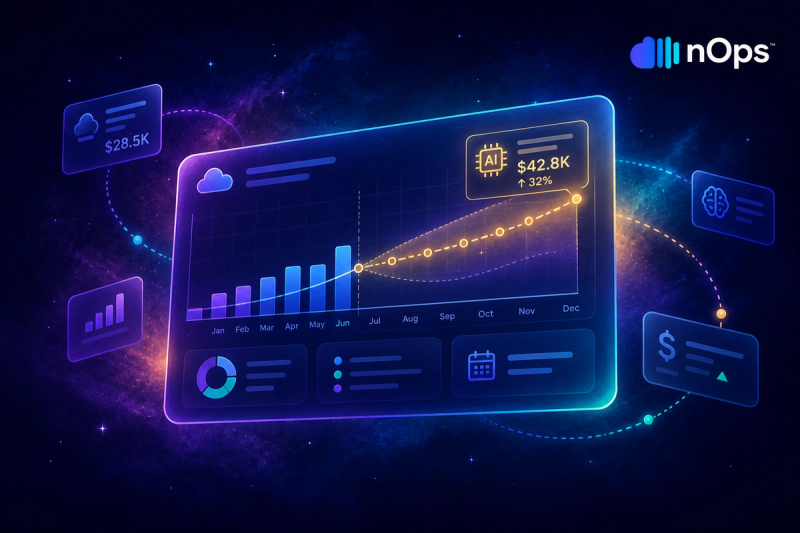
- Tracking spend by provider and model, split by token type
- Watching the blended price per token as model mix shifts
- Comparing spend against usage, so a falling price doesn't hide rising volume
Allocation
Allocation ties spend to the team, feature, or customer behind it. Providers bill by API key or project at best, so attribution has to happen at the point of the call. The work includes:
- Tagging every call with team, feature, and environment metadata
- Deciding how shared costs, such as a central AI gateway or embedding pipeline, are split
- Choosing showback or chargeback for each team
Optimization
Optimization lowers the consumed tokens per outcome without lowering quality. The levers:
- Routing simpler requests to cheaper models and reserving frontier models for hard ones
- Adding semantic caching to reuse answers to similar questions and context window management
- Moving work that doesn't need an immediate response to batch pricing
- Checking output quality after every change, since cutting tokens can degrade results
Governance
Governance keeps spend within plan as usage grows. In practice:
- Setting budgets and anomaly alerts so spikes surface before the invoice does
- Reviewing budgets and actuals on the same cadence as cloud spend
- Reviewing the cost of new AI features during design, not after launch
- Measuring cost per outcome, not just cost per token
Each of these is covered in detail in the AI token economics guide.
TokenOps with nOps
Fully optimizing AI spend means understanding how token consumption, model choice, and application demand affect the broader cloud environment powering them — across AWS, GCP, and Azure, and across every model provider running on top of them.
That's where nOps comes in: helping FinOps teams understand, allocate, and optimize AI token costs alongside the rest of their cloud and AI infrastructure.
We've talked to companies that can save millions on their cloud bills by switching to nOps from competitors. Book a free savings analysis to quantify exactly how much more you could save across the infrastructure supporting your AI workloads and the rest of your cloud environment.
nOps manages $5B+ in cloud spend and was recently rated #1 in G2's Cloud Cost Management category. nOps is a premier member of the Tokenomics foundation.
Demo
AI-Powered Cost Management Platform
Discover how much you can save in just 10 minutes!
Book a Demo
FAQ
We'll cover a few frequently asked questions about optimizing your LLM token consumption and pricing.
What is TokenOps?
TokenOps is the practice of tracking, allocating, and governing LLM token spend. It makes consumption visible by team, feature, and environment, and keeps it within budget. Unlike cloud compute, AI costs can scale nonlinearly with usage, so a longer conversation, an extra tool call, or a retry loop can multiply the bill without any increase in users. Token spend can reach millions monthly at enterprise scale.
Does a cheaper model reduce token cost?
Not always. Price per token is only one variable. A cheaper model that needs longer prompts, more retries, or extra agent steps can cost more per task than a stronger model that gets it right the first time, so compare cost per outcome rather than price per token. A single user query can consume over 13,000 tokens in complex workflows.
How much can caching and batching save?
What tools support TokenOps?
A TokenOps tool needs to pull token usage from each provider, attribute it to teams, features, and customers, and alert on budgets and anomalies. nOps does this across AWS, GCP, and Azure and providers such as Anthropic and Cursor, with token-level cost attribution, budget governance, and anomaly detection. The AI cost observability tools guide compares the wider field.
Who is responsible for TokenOps in a company?
Ownership is shared. Engineering controls how tokens are consumed, finance forecasts and budgets for them, and FinOps teams connect the two. It works best with clear allocation rules rather than as one team's sole responsibility.
Is TokenOps the same as the crypto TokenOps platforms?
No. In crypto, TokenOps refers to tooling for token issuers, the projects that distribute tokens to their team, investors, and community. TokenOps helps institutional investors manage portfolios of illiquid assets. These platforms track the token cap table, set up vesting smart contracts that release tokens on a schedule, let recipients claim vested tokens as they unlock, and show token ownership after distribution. The practice described here concerns LLM token costs and has nothing to do with cryptocurrency. An AI token is a unit of text a model processes, not an asset anyone owns.